Environmental game: a game that relates to environments and the player’s ability to change it. Notice that I do not define an “environmental” game as one that is able to visually recreate the natural world we experience on Earth. Good graphics are trumped by sublime gameplay that manages to capture essential facts of life. Video games are like moving paintings in that way. Environmental games make us think about our relationship to the world around us. Of course, a truly realistic simulation… where one could live as they would in real life… such a simulated reality would be pointless! Realism is unnecesary when creating an environmental game. The gameplay itself conveys more reality than the mere visual experience.
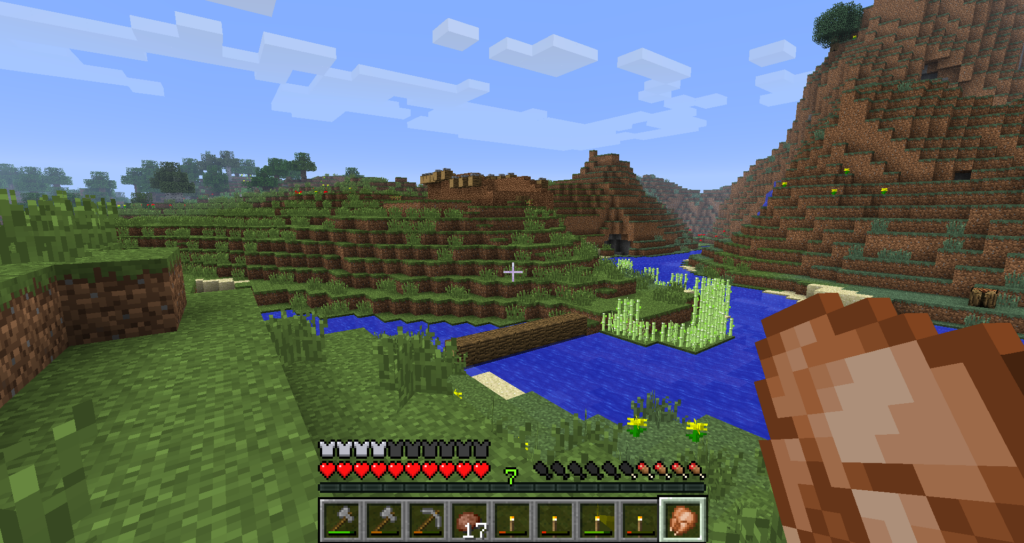
Minecraft is a true environmental game. The player, Steve, can create and destroy freely. Through extraction of the land itself, Steve makes houses, farms, and machines. The game is played through the first person, which always endeared me about it. I would only use f3 third person mode for taking pictures.
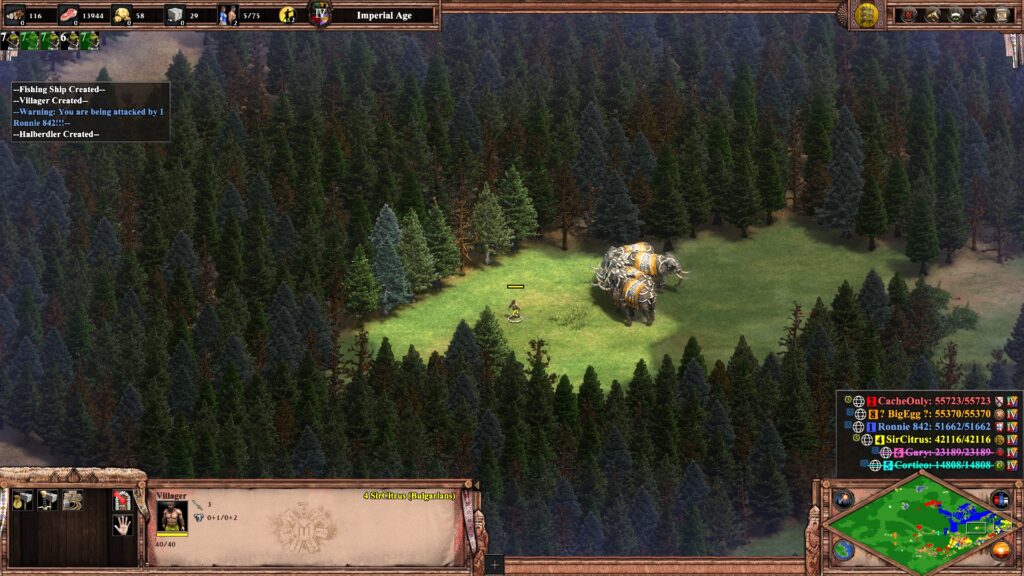
Age of Empires is a strategy game about controlling little people on a map to build structures like houses, mills, and baracks. They can perform resource gathering tasks like chopping wood, mining, or even tending to a field of crops to make food. As the player extracts, however, the environment changes. Where green forests once stood, stumps and stubble remain. After a long enough session, the land is trampled absolutely barren. The flat expanse of a battlefield!
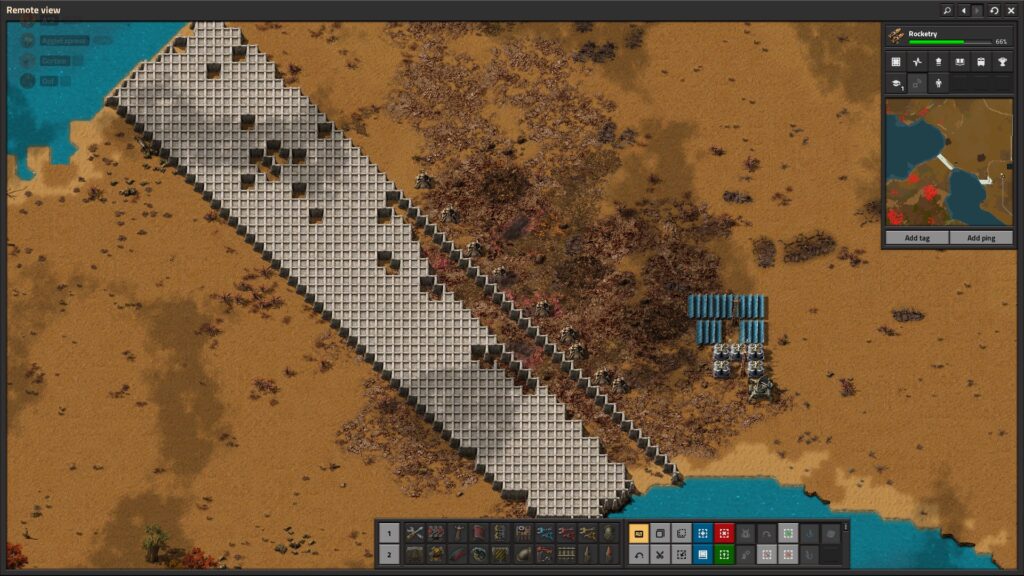
Factorio is another game that offers the player a third person, top-down view of the environment, but like Minecraft, the player is in control of a single body. As a castaway space traveler, you must mine metals and craft them into machines. All of the machines the player builds work together to create a giant factory whose fires run as long and hot as the player is able to provide it with fuel… coal, wood, oil, enriched uranium. The very process of extracting all this stuff drains the life from the world. And the native population, agitated by the cloud of pollution the factory inevitably produces (unless the player carefully manages their electrical consumption with solar panels and batteries..). Under attack by natives, like some horrific techno-puritan in marshes of Boston, the player creates ammo, rockets, explosives, napalm… not to mention great big walls to keep everyone out. A kind of global warming is built into the game to organically fuel the necessity to develop a military industrial complex that consumes and endless amount of material from the land.
I want to propose as an area of further inquiry: the bias that western colonizer nations have in making environmental games. Notice how my outline always surrounds the idea of extracting resources. The changes made to the environment in each of the games I listed above hinge on destroying the existing world in order to build an agricultural-industrial one. In Factorio and Minecraft specifically, the player generally plays completely alone or in a small group of friends. What is it about the story of a lone castaway transforming their lonely island into a productive distillation of home that so captivates us? Is the idea of settling and transforming a place an ingrained aspect of western culture specifically? JD Vance level question. A better question would be: are there people out there that make environmental games offering adifferent relationships with the world around us? Are there environmental/survival games where the player is not extracting from the land? changes our relationship to the natural world away from the idea of “extracting resources” altogether? Can a game be really fun if you aren’t constantly hacking at trees and smelting ores to fight beasts and monsters? The answer to these questions may present potential paths forward in the real world as well. Because a great environmental game should inspire hope, not despair!
A non-extractive but nonetheless environmental book I know of is called “My Side of the Mountain” by Jean Craighead George.
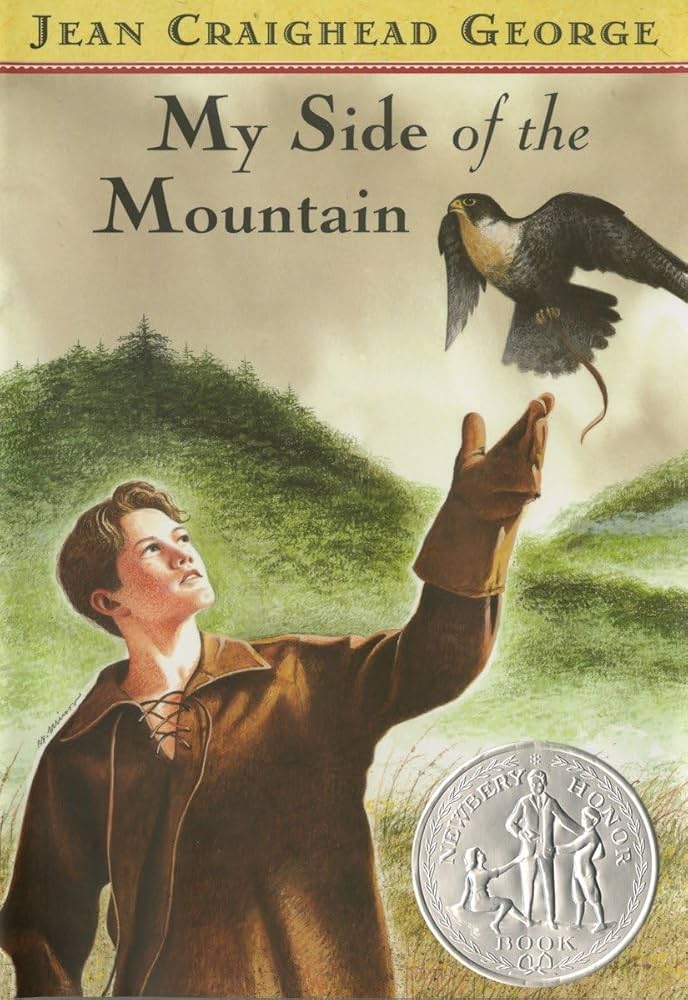
In this book, a boy goes off to the wilderness to get away from his giant, annoying family. He travels out to the Adirondacks many days hike from roads or towns. There, he isn’t frantic. There is no reason to build great palisades or battle with natives. He doesn’t even need to build a house; the hollow of a great tree is enough for him to sleep in. He kills a deer, just one, for meat and leather and befriends a hawk that becomes his best friend and hunting buddy. He hikes into town from time to time to see the librarian and learn how to do things. His greatest adversary, if they can be called that, are regular people. Rangers and men that would try to take him away back to civilization. It flips the survival genre on its head in a peaceful way. Man is not trying to recreate his agro-industrial life in the wilderness… hell no! This young man is trying to get away from all that and find some peace and quiet!
Are there games that offer this kind of gameplay? Peaceful survival gameplay, I guess you could call it. Can games like that be as fun as the hardcore survival games?