August 18, 2022
Worm
“I modify the human desire for war.”
-Leto II
“I modify the human desire for war.”
-Leto II

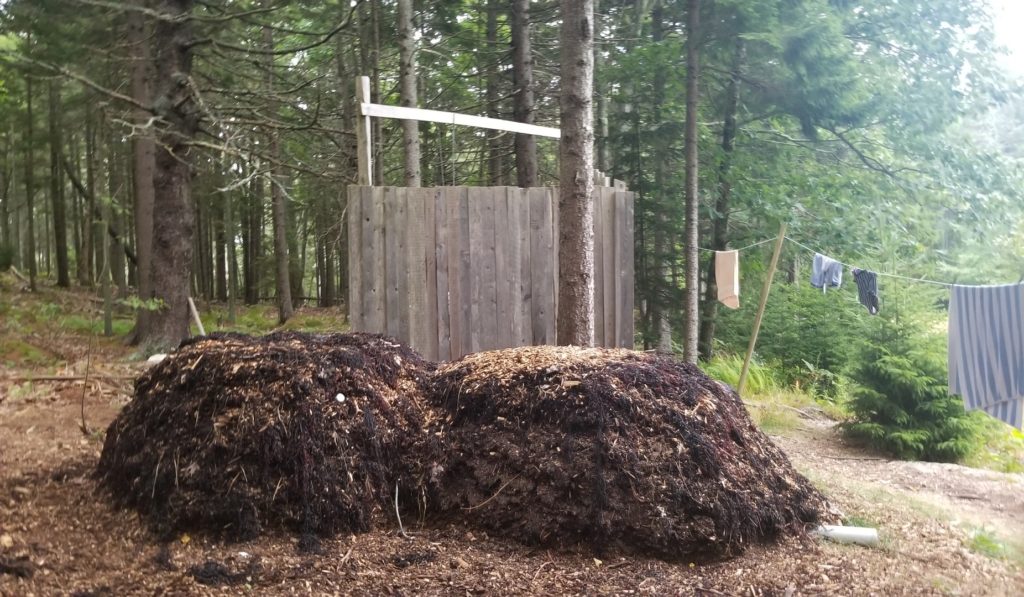
No, those are not mounds of shit. That dingy wooden structure is a shower, and those two piles are the water heater. A tank is buried beneath the mounds. As the sun beats down on them throughout the day, the microbes inside get to work breaking down old plant matter and the compost piles heat up. The water in the buried tank can reach a hundred degrees!
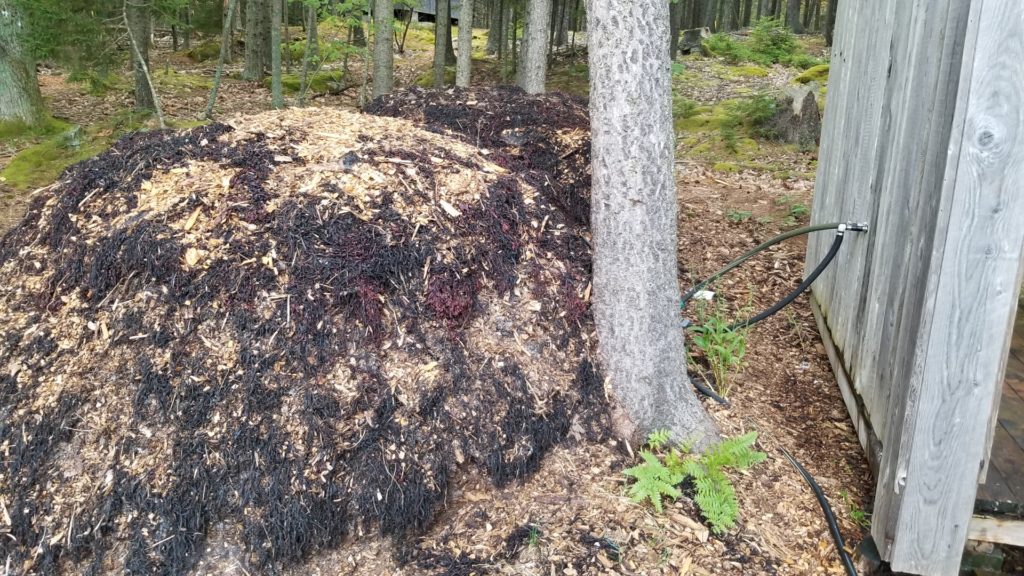
This picture doesn’t really do the piles justice. Crimson black seaweed is mixed up with wood chips and saw dust to create a natural water heater. A spigot inside the shower shack spits out bathwater for bathers to enjoy and wash themselves with in the open air. To emulate the shower experience, a watering can that can be hooked onto a pulley can be hoisted and tipped above a bather’s head.
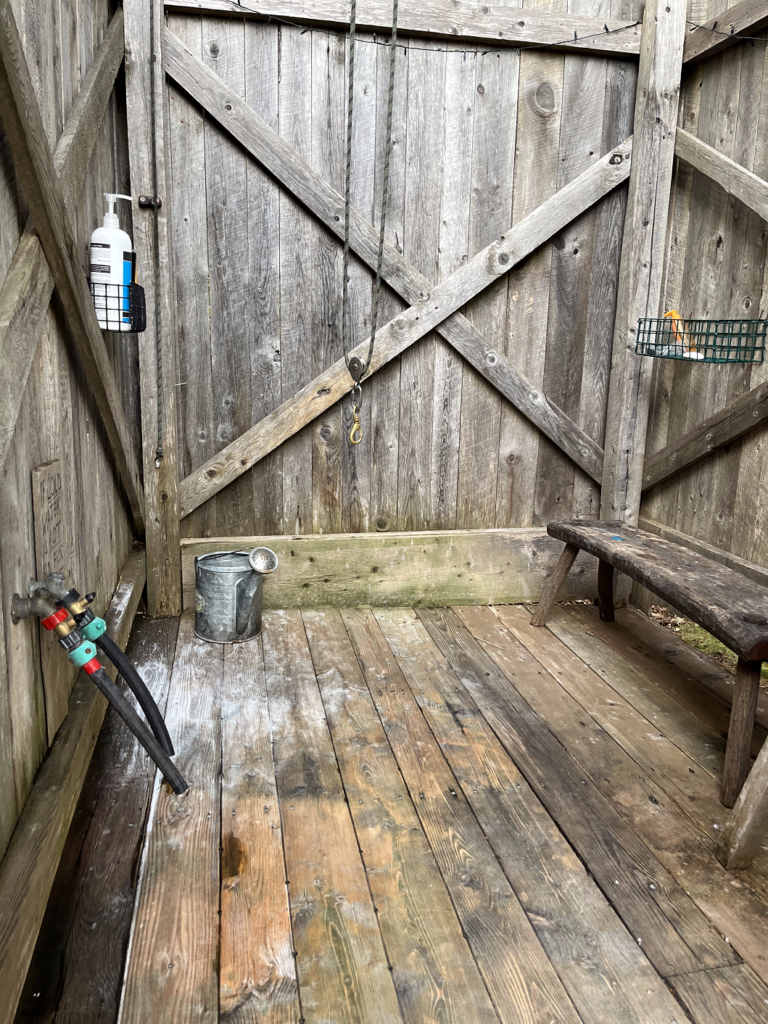
The whole experience was more than comfortable. The warm water, the cool breeze between my naked thighs, the open sky above! Three pails of water was all I needed to do the job. I can’t imagine it is very pleasant once the weather cools, but it was so refreshing to have an after-dinner wash in the evening air after an afternoon of hiking around the Maine wilderness. This wonderful setup was provided to me and my girlfriend by the Deer Isle Hostel. We thought we were just getting a room in some artsy cabin–we had no clue that we had signed on to join a low-tech commune powered by solar panels and compost.
The shower was just one of the nifty technologies that this lovely compound employs to avoid modern waste. The outhouses were composters too! But I’ll show those off at a later time. For now, I just wish I could bathe myself outside again. Maybe I’ll get a bucket and some rope and have some fun on my back porch…
“The wolves are but an extension of my purpose, and my purpose is to be the greatest predator ever known.”
-The journals of Leto II

I feel exceedingly empty sometimes. I recently bought birthday gifts for people that no longer want to associate with me in any way. The garden grows exceptionally this year regardless. We let the beds overflow with life of their own. Clover and strawberries gave way to towering wildflowers and onion stems. Even a lone tomato, impoverished heir to last summer’s dynasty, peeks its little yellow flowers out over the side of the box. An understory of green stems create a paradise for little bugs, and the overstory, a buffet for bees and flower lovers of all kinds. Every square inch of soil is being used. Next year, I will not have access to this much soil. I may take some of the dirt with me and see what comes out of it when placed in a pot.

Experience the ultimate simulated reality!
Download here:
http://www.sargunster.com/btwforum/viewtopic.php?t=10183
“My dear Jane, Mr. Collins is a conceited, pompous, narrow-minded, silly man; you know this, as well as I do; and you must feel, as well as I do, that the woman who marries him, cannot have a proper way of thinking.”
– Elizabeth, Volume II Chapter I
I have been digging into Jane Austen’s big book lately, and it feels good to be reading something so unabashedly English again, both in terms of complex language and plot. The English is beautiful, of course, though it takes some practice to be able to read this dense style efficiently. The ideas being expressed aren’t so different from our own, though the infrastructure of meaning, the words and flowing sentences, are more ornate and complicated. An acceptance that words are going to be used in ways that are slightly different than our own usage is a must. Daring explorers are rewarded with a trove, a bounty, of lovely interesting phrases.
“ready acquiescence”
“these sort of inconstancies are very frequent.”
“thwarted”
The unique way that Austen folds sarcasm and cutting evaluations of character into intricate, vocabulary-dense sentences is surely part of why she is such a famous and beloved writer. But sometimes the bullshit is slashed right through, and we are shown gems like the quotation at the top of this post. There, Lizzy speaks directly to what everybody, reader included, had been thinking for the past hundred or so pages: Mr. Collins is a dipshit and an idiot. I laughed when I reached that sentence, because it is so different than the language we are accustomed to in the novel and because the feeling conveyed is not one minute out of date. We say the same things in the same way about people when comforting our friends today, except the words and phrasing is a little different.
Between these glimmers of light are long periods of visitation in which language must be employed like a dagger between a smile. If life was anything like the novels say, being of the higher class in old England sounds like a major chore. Neighbors and family could descend upon your household at any time, and polite custom was that you’d entertain them. From Defoe to Austen we find the living room to be a maze of endless small talk and gossip. Protagonists have to fake ill just to escape. The neighbors are trying to pry open your brain with blunt talk of the weather! I argued, once, that the English custom of visits acted as a kind of social prison, a living room panopticon. The constant surveillance from visiting neighbors ensures that perverse, criminal, or marginal behaviors are neatly suppressed. And in novels, the surveillance really does seem constant! Every other chapter of Pride and Prejudice takes place in a dining room or living room and seems to surround the visit of somebody or other.
It is refreshing when Elizabeth breaks free and let’s something real slip out. She is a wonderful protagonist precisely because she manages to break rules constantly. She’s like a bull in a language china shop. I am just making my way into the second volume of the book now, and I am unspoiled. I have no clue what will happen to the characters beyond a general sense that Darcy will turn out to be an okay guy in the end. I wonder, however, if the prospect of getting married will force Lizzy into conforming and putting aside her rebellious charm. That would be a tragic low point!
Last month, Sam crossed a trickle of a stream in the woods and found himself in a place that he could only describe as another world. The colors seemed to stand out stronger there, and the light was so bright that it almost hurt to look beyond the shadows of the trees. He wanted to go back to this magical forest, his secret place, but instead he sat at his desk, chin on his hand, bored in school. The fifth grade had nothing to teach him. He already read books on his own, and he could multiply well enough to get by in math. Under his elbow sat his math textbook open to page 57. The class was somewhere on page 32, but, since Sam possessed an uncanny ability to focus on tasks, he went on ahead whenever he finished a set of problems. The class seemed to move in predictable circles. Whenever his teacher, Ms. Bucket, began to even hint at talking about something new or interesting, a troublemaker across the room would swear or shout and then Ms. Bucket would start shushing and disciplining and nothing would get done. Both Ms. Bucket and the students left that classroom every afternoon feeling exasperated and worn out, and neither learned much of anything.
Soon, Ms. Bucket would see that Sam had completed more than enough extra pages of worksheets for one afternoon and give him permission him to grab a laptop from the cart. This was Sam’s favorite part of every class because he was left mostly free to explore the internet as he pleased. He was supposed to use the laptop to log into IXL and complete even more math problems online, but he preferred to look stuff up in the search bar. He loved to look up cute pictures of baby animals, or pictures of games he wanted to play but couldn’t. Sometimes he looked up creepy things like organs or giant wasps or monsters and freaked himself out. He wished he could just stay home and play on the computer there rather than come all the way to school to do it.
Ms. Bucket did soon notice that Sam was bored, and she went up to his desk with an apologetic curve of her eyebrows and a smile. “Wow, you did all that?”
Sam looked at his hands and nodded. “Yes, it wasn’t very hard.”
“Awesome work as always, Sam. You can go grab a Chromebook.”
Sam did as he was asked, and soon he was surfing the web while the jeering class moved on around him. He thought that today he would do some research on his magical place in the woods, so looked up the word the keyword “forest.” He was met with a sprawling page of boxes, each containing a picture of a lush, green forest. Some of them were bright orange, images of the woods during Fall when the leaves change into beautiful warm colors and die off the branches. Some of the pictures were of jungles, the wet and misty rain forests. Only one picture reminded him of his magical forest. It showed a tree so bright that its cracked, brown bark looked orange, and massive dragon scales of bark flowed down the trunk of the tree like lava. Sam read the caption to himself:
“Redwood Forests of California.”
I discovered this unfinished opinion piece in my hard drive.
-BEGIN TRANSCRIPT-
It’s shiny, it’s smooth, it’s packed with expensive components, it’s competitively priced. It’s the Steam Deck.
There are a few reasons the Steam Deck has me going wild. First and foremost, Valve’s latest project speaks to me on an instinctual, almost primordial level. I am a Gameboy baby. Always have been. In fact, I grew from a Nintendo playing baby to a Nintendo playing adult, and these days I’ve spend more time looking at a Switch screen than I care to admit. I also really like computers in general. Spending time with them is cathartic. I like installing things and browsing internet forums and generally wasting time on a screen. The problem with Nintendo systems like the Gameboy and the Switch is that they don’t let you do very much with them besides play games. The Steam Deck promises to take the beautiful concept of a personal computer and merge it with a portable gaming console under one sexy plastic package.
Do you even know what I’m talking about? It occurs to me that unless you are already immersed in the computer gaming world, the Steam Deck might be niche knowledge. If you aren’t in the know, Valve, creator of the venerated gaming platform Steam, is creating its own portable gaming system. It’s basically a grey Nintendo Switch without detachable controllers. In turn, a Switch is a sort of really powerful Gameboy. A Gameboy was like a phone before there were phones, except that it can’t make calls or texts or access the internet. You used to look like a tool for carrying around a Gameboy, but look now—everybody is glued to their phone screens. I like to consider the Steam Deck the latest in a lineage of Gameboys stretching as far back as the history of electronic gaming itself. The Steam Deck is a very fat Gameboy.
Besides its drab color scheme and bulkier design, the Steam Deck performs a similar role to Nintendo’s product. The Switch was a major step forward in portable gaming because it could bring large 3D games like Zelda portable. Before, such titles were relegated to home consoles. The deck can play high quality games portably, and it can be docked and attached to a monitor or television to project its screen onto a larger display. For folks that mainly game in their homes with immobile Playstations or Wiis or PCs, this may not seem particularly interesting (although there ARE reasons stationary gamers might be interested in a Deck, to be discussed later). To longtime Gameboy babies, however, the Steam Deck represents the culmination of a decade spanning project to liberate quality gaming experiences from the confines of the home.
The history of mobile gaming is long and fractured. Before the iPhone made it cool to stare at a computer screen in public, there were Gameboys. I inherited the original Gameboy from my father and a Gameboy Color from somebody (maybe my brother), but I was too young to really use these things. They were arcane toys that beeped, and without backlit screens, actually seeing what was going on on screen was difficult. I remember there being a booklight adapter for them that could be clipped to the Gameboy to illuminate the screen in the dark. I didn’t really “get” the Gameboy until I got my first Gameboy SP sometime in the early 2000s. I had a Yoshi’s Island Cartridge with it, and while I wasn’t very good or successful with the games, I was in love. Super Mario World on the Gameboy was one of the first games I ever beat all by myself. When I finally realized you could escape your bedroom in Pokemon Ruby by setting the clock, the course of my childhood changed forever. Pokemon and Mario were my Gods. The Gameboy eventually became the DS which eventually became the Switch. PSPs, Ipod Touches, and phones also entered the mix.
The problem with mobile gaming for many years was that the quality of the experience was always a few steps behind that of the immobile console and computer games. For example, most of my favorite games on the Gameboy SP were ports of SNES games. While Gamecube players were experiencing beautiful 3D gameplay in Wind Waker and Sunshine, the Gameboy were largely stuck with games made a decade ago. If it wasn’t a ported platformer, Metroid, or Kirby, I was probably playing an RPG like Pokemon or Fire Emblem. While 2D platformers and turn based RPGs flourished on the Gameboy, it could not capture the kind of immersive 3D experiences that was being developed for the more expensive equipement. The DS opened with Super Mario 64 DS, a port of the genre defining 3D platforming masterpiece that was originally released a decade before. Even the 3DS, though it had some truly console quality experiences in the likes of Smash 4, was mostly a Pokemon/Fire Emblem machine. These Gameboy style games were fun and addictive, but you weren’t playing Dark Souls. As PC gaming and the indie revolution really took off in the 2010s, the DS line felt increasingly lackluster. It wasn’t until the release of the Switch in 2017 that modern gaming experiences could finally be had on a portable platform. Until then, mobile gaming was usually second rate.
I love the Switch, I really do. The thing is, I don’t use it for the Nintendo games anymore. At least, I’m not using the ones Nintendo wants me to use. Like the Gameboy that came before it, the Switch has an expansive library of ports. A slew of indie games previously only available on PC or console have never been better after finding a home on the Switch. You can also hack the Switch to emulate pretty much everything up to the N64 (and even PSP games to an imperfect extent). I particularly like having Dark Souls portable.
-END TRANSCRIPT-
It is a little scatterbrained. I was pretty hyped for Valve’s handheld.
The Steam Deck is actually in my hands now. In some ways, it makes me miss my old Gameboy SP. It is far too large for comfort (though resting it on my belly in bed takes much of the load off), and the battery life is awful. On the other hand, the Deck is providing me the greatest portable Minecraft experience I have ever seen. I can play Better Than Wolves in bed. That’s incredible.
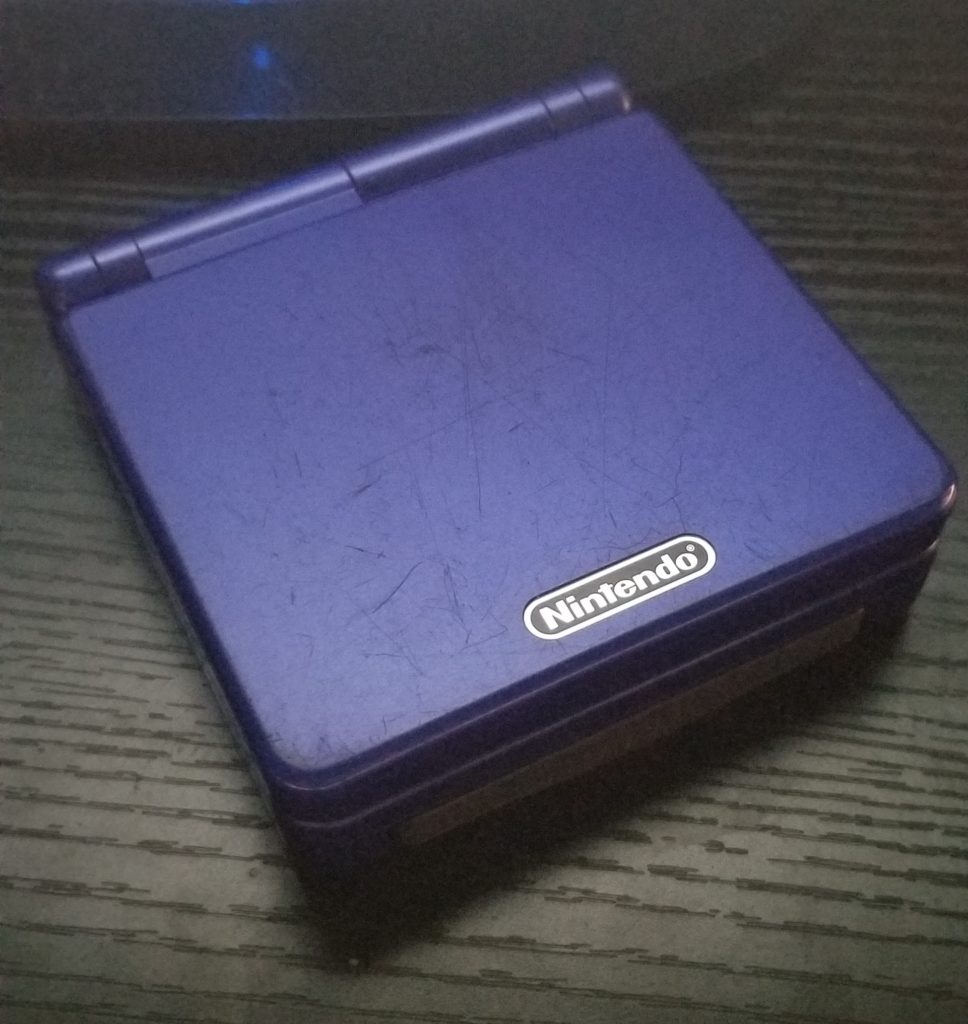
I plan to write a real Steam Deck review sometime. It’s is a fantastic project littered with bugs and flaws. It is a project so fantastic that the flaws barely matter.
Happy Solstice! I love the long afternoons of June.
An animator that I subscribe to on YouTube, vewn, recently released a wonderful (and long!) new project called Catopolis. I recommend checking it out here. Watching this video brought down the rabbit hole and I stumbled across an older animation of hers that I happen to love:
FLOATLAND
The animation depicts a nostalgic scene: messy cozy carpeted bedroom, big CRT, and an even bigger game for the protagonist to get lost inside. The main character, lit by that warm static glow, smiles with glee as she builds up a digital garden, fights monsters, and flirts with the game’s charming romance avatar. The images are edenic, a gamer’s paradise. She seems to have endless free time to enjoy an open ended gaming experience, and there is seemingly nobody around to disturb it. The pure joy of the immersion eventually gives way to boredom, of course, and then a depression. She ignores texts from friends. The alcohol bottles and burnt cigarette butts begin to stand out a lot more. The loneliness is palpable here.
Despite the spiral into despondency, the video does not actually end on a sour note. It’s hopeful, actually. The protagonist eventually completes the game. She reaches level 99 in all of the game’s various activities and discovers “true love” with the romance guy. From there, the game ends, and the protagonist peels away from the screen, crawls across her room, and opens a window. Natural light and color return!
“You’ve reached your fullest potential here in Floatland. It’s time to say goodbye.”
Anyone that has played a game like this, be it World of Warcraft or Runescape or Minecraft or Sonic Adventure 2 Battle Chao Garden, might see the fantasy here. Open ended games don’t usually say goodbye. They are designed, in fact, to be lived in. Players can grind and build endlessly until the gameplay loops feel familiar. I find that the allusions to drug use in this animation are apt–nothing makes life in the virtual world more engaging than a drink or a smoke. Even when all the pleasure and surprise is utterly sucked dry, the habits can feel like a cage. The game isn’t going to give you a key anytime soon.
And that is why I love how this animation ends. After the climactic existential moment, there is a true release. Vewn doesn’t actually provide us any concrete escape. In fact, the protagonist doesn’t even smile as she looks beyond her window, but a weight is lifted nonetheless.
I have found that, as I get older, my hunger for stimulation has not abated, but compelling myself to discover new sources for that stimulation has gotten more difficult. It is easier to sit in my chair and stare at virtual worlds both new and well trodden than to get up and go outside. When I do finally get out there, however, I am reminded that the physical world, forests and fields and cities, are a thousand thousand times more complex and interesting than anything anybody has ever rendered in a game. A drink and a smoke make these places more interesting too, so best take that habit outside too if you really must.
The Lawn of Legend
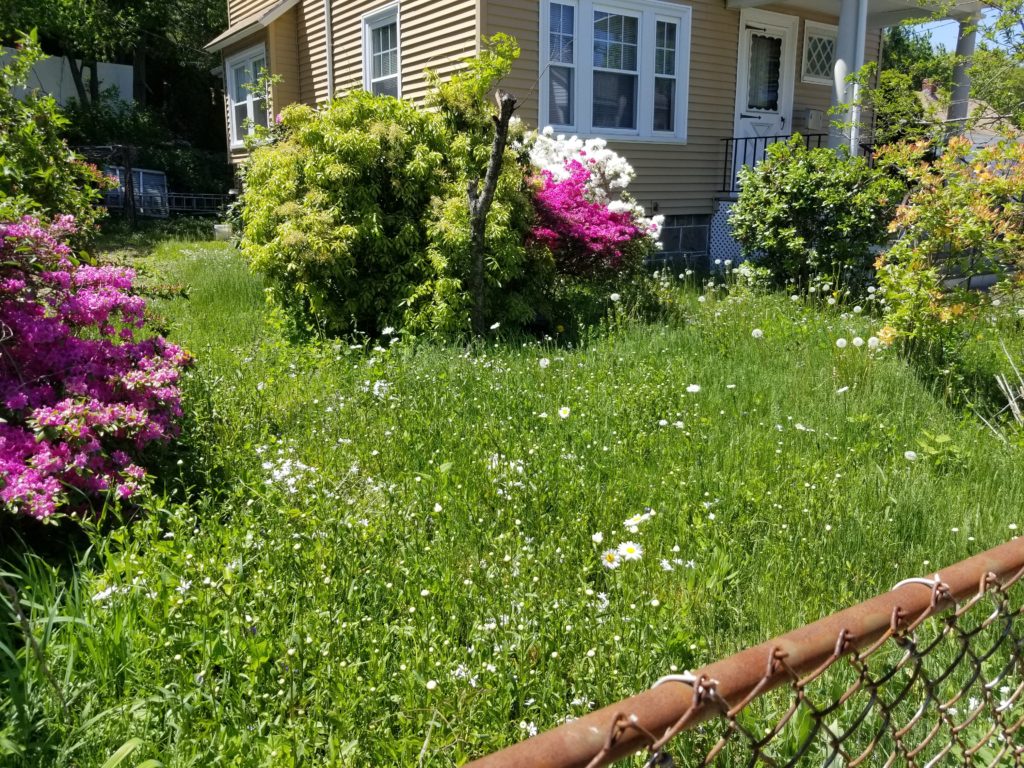
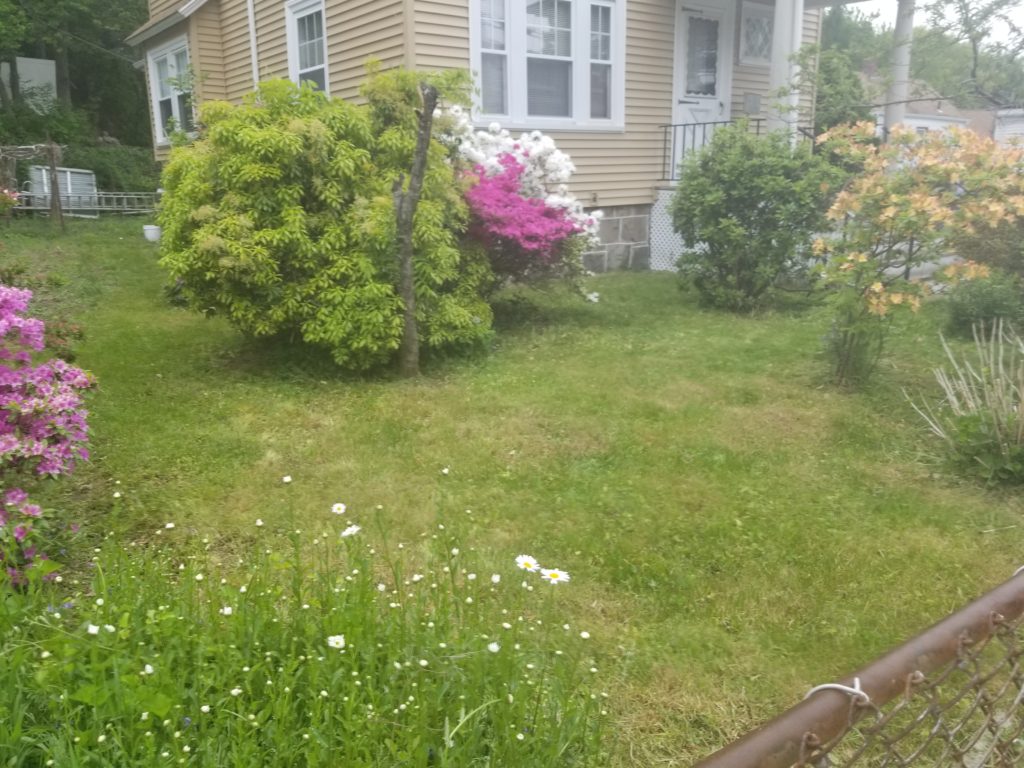
There was a brief period of time when I was a kid, a few weeks at most, when the backyard did not get mowed. I don’t remember how old I was, but I do remember the glory of it. The grass rose up like a forest, boundless blue-green tufted by seedy, serrated sheaths. The unmowed grass grew timidly at first, but once it realized that no blades were coming to bother it, the lawn transformed itself into prairie fit to devour an eight-year-old. Compared to the fungal waste that our yard would come to resemble over the following decade, that period of uncut grass seemed like the very beginning of the world.
We would play Pokémon in that grass, my cousin and I hollering and rolling as we imagined all the different varieties that could inhabit our own personal corner of the wilderness. Meanwhile, real animal life seemed to pour forth from the dirt like the tenets of a plague. Stalks swayed and flicked as bony grasshoppers leapt and dove between laden seed pods. A rodent living underneath the shed grew bold enough to reclaim his proper title as “field mouse.” The wheat, sensing rightly that this unchecked period was as transitory as the moths, birthed an entire ecosystem in the span of a week.
I was generally terrified of insects and birds and anything that moved unseen and unpredictably, but I played in that grass every day. I rolled in it, crawled through it, and watched it. Officially speaking, we were forbidden from touching the backyard at all during this period. My mother screamed about ticks and other disease-carrying arthropods. My best friend’s mom had an even more aggressive response. Grass stains can kill, apparently.
The grass hurt my father the most. Each green needle stabbed at his pride and caused his skin, usually so rough and calloused, to bleed beads of shame. It seemed this riotous grass was the latest slight in an endless train of frustrations that stretched back to before I was born. He would sigh over and grass and yell at the grass. He would complain of unheard whispers from the neighborhood about how terrible our lawn looked, about property values and the steady decline of suburban integrity. The grass is destroying us! We are the neighborhood laughingstock!
I don’t remember exactly why the grass had been allowed to grow so tall in the first place. Maybe the ridable mower, that herbivorous shark of a machine with aerodynamic hull and one-thousand speeds, finally croaked. Maybe mom was in the hospital again. I really don’t remember, but the issue did clear up eventually. The giga-mower roared back to life one day and the tall grass was gone in an hour with nothing but a haze of pollen to indicate that anything strange and unearthly had ever been allowed to grow back there at all. I’m sure the ordeal killed my lungs, stuffed my nose, and forced my eyeballs shut for a week.
Many years later, the third-grade teacher that lived across the street got a divorce and moved away. In her place came an Indian family containing a mother, father, and a little son that liked to wander and gape at every corner of his new yard. Perhaps he had never had a yard before. This turn of events gave the rest of the neighborhood something new to chitter about. I began to notice little comments, a remark about catching a whiff of curry every time the neighbors opened their doors to step outside. Sometimes the father didn’t wave or smile eagerly enough when the Lexus SUVs drove by. An exotic new neighbor gives a once-new suburb excitement to feed upon for months.
Among all the little peeves was one crucial flaw—our new neighbors did not know how to take care of their lawn. As their stay grew longer, so did their grass, and before long the entire front lawn resembled the primordial grove of legend. The toddler was likewise entranced. The tiny blades that had once cushioned his feet now swallowed his head. His little head could be seen bobbing as he endlessly marched his matted stretch of wilderness like a conquistador. I’m sure the experience enriched that toddler’s life immensely, but the lawn was a bane to the neighborhood. Old griefs were born anew in my father, and he began to complain loudly about the embarrassment across the street. His imagination likely swam with nightmares of plummeting property values and changing times.
“Is the guy going to hire a crew?”
“Has he ever owned a lawn before?”
My father eventually settled on the theory that our neighbor was some big city tech-wizard that had come to colonize our slice of American suburbia. There are no lawns in the concrete jungle. Frustration turned to pity, and my dad took it upon himself to lay the green menace low. He rode his monster mower across the street and cleaned up the place in no time at all. The crickets and butterflies and mastodons returned to the earth just as quickly as they had emerged, and our neighbors learned soon after to keep it that way.
I don’t live there anymore, but I imagine the lawns are still as flat and brown as ever. An unpruned landscape is a very dangerous thing.
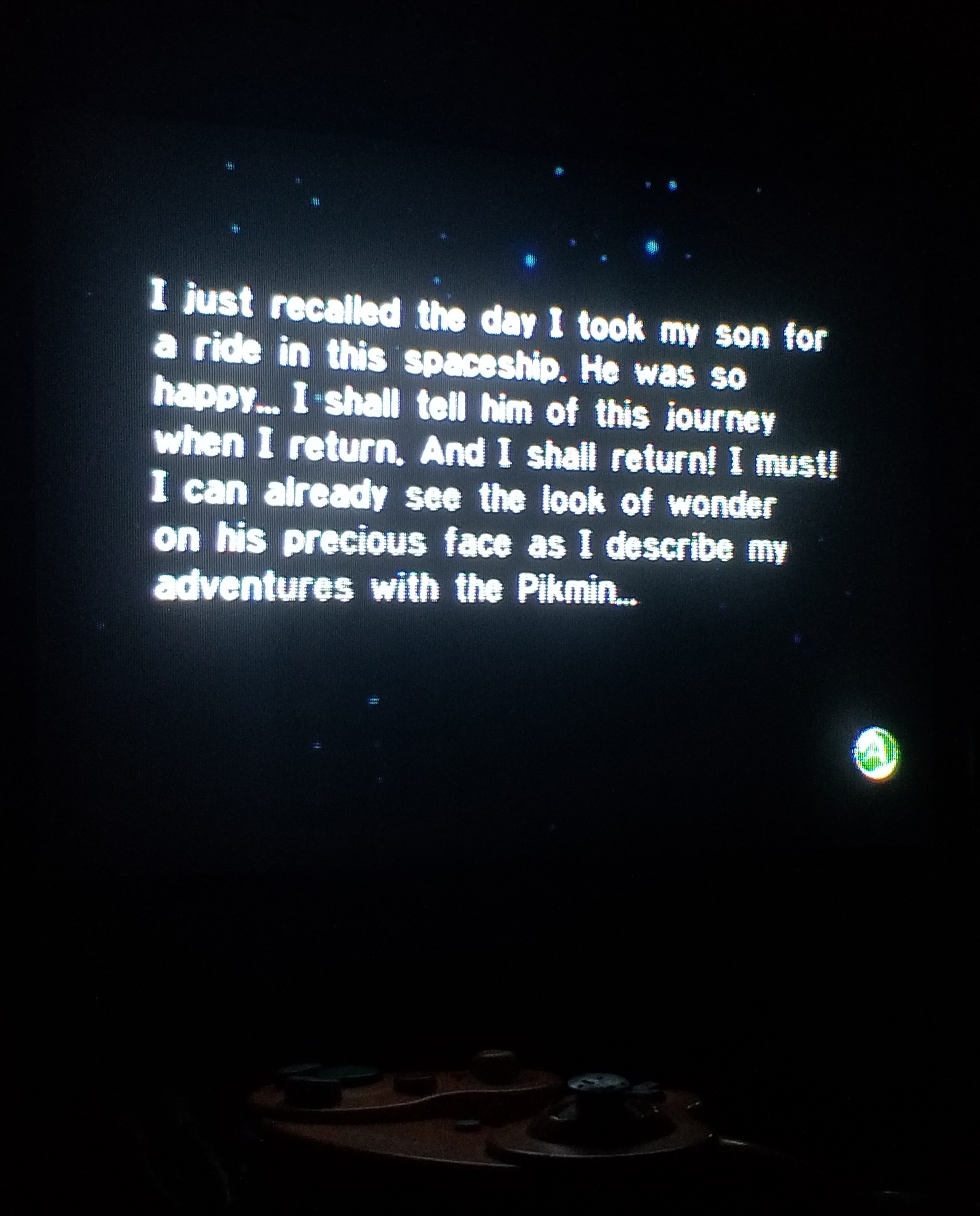
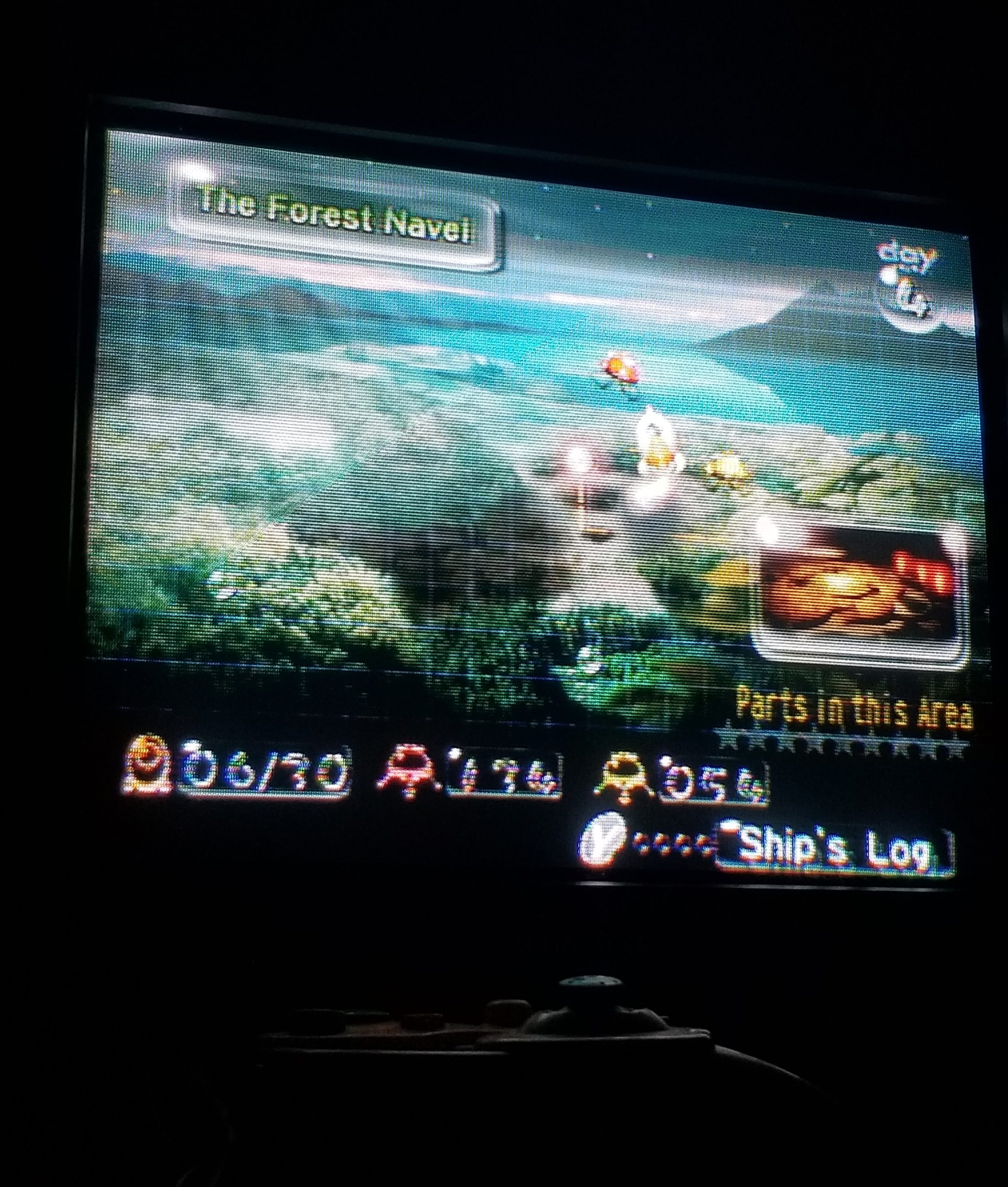
Replaying the original Pikmin game after Pikmin 3 reveals a forgotten truth about the game’s titular critters: Pikmin used to be really stupid. This fact becomes increasingly obvious as the game progresses and the areas become more complex. Leaving the landing site in the Forest Navel illustrates Pikmin stupidity very well. You have to carefully weave your Pikmin around a gauntlet of potential distractions just to get to the action. Blades of grass, tiny rocks, insect corpses, and budding plants all provide a convenient excuse for a portion of your Pikmin army to lose focus and disconnect. And when they aren’t being distracted, they trip, or fall under a ramp and trap themselves before being left behind. Forget about crossing bridges over water—if your army is sufficiently large, some Pikmin WILL fall off the side of the bridge and drown.
At first, I would stop the march after every little hiccup and wait for the stragglers to catch up. “No Pikmin left behind!” was the motto from my childhood, but it seems my old heart has hardened. I used to become so upset by Pikmin death that I would play extremely cautiously. The GameCube would not remain on long enough for all of the Pikmin to die in the event of a major workplace accident. Now, I find myself weighing the cost of indulging stupid mistakes:
“I’ll go back for those assholes later, I still have enough Pikmin to carry the treasure.”
When a lose a few Pikmin in a tough battle, my instinctual remorse is quickly replaced by a numbers game:
“Okay, I can replace those losses with the bug I just killed.”
Or, more callous still:
“I have a two hundred of these guys in storage, I’ll just restock on my next loop around.”
The random tripping and similar distraction mechanics creates interesting gameplay near day’s end when the desire to finish a task or escort treasure is pit against the paternal instinct to save a stranded Pikmin. Rescue missions are a huge part of the experience. Since there are not multiple captains at your disposal in Pikmin 1, sending Olimar across the map to save Pikmin is a real risk. Pikmin 3 gives you so much map control at once with three captains that the gameplay becomes less about managing risk and more about pushing your multitasking powers to the limit.
Unfortunately for my stupid Pikmin, I found myself caring less and less about saving them from themselves as the population at my disposal shot up. Stranded dots on the map were met with spite. In my mind, Pikmin that couldn’t keep up deserved to die. Stupid bastards. The characterization of the Pikmin as lazy, lovable idiots is pushed well in this game. Once while I was taking an army from basecamp toward a battle, a convoy of Pikmin carrying a corpse happened to cross my path and pass through my ranks. My soldiers jumped at the opportunity to dodge duty and a few yellow Pikmin grabbed hold of the corpse and headed home. I let the fools go. They lived to fight another day.
And days did come when I had to dig into my Pikmin reserves. Playing fast and loose lets you progress quickly, but some losses were severe. I lost an entire army of blue Pikmin to a pale wollywog in the Forest Navel, and this forced me to head to the impact site for a little R&R (Regrowth and Retribution). This vacation, however, caused the creatures in the Forest Navel to repopulate, which lost me a day at least. The final boss really tested my Pikmin reserves. He managed to stomp an entire army of 70+ Pikmin into oblivion with a single leap. If I did not exploit a soft reset, I would have ran out of yellow Pikmin entirely. In this case, the reset mechanic saved me time and angst at the cost of interesting gameplay that would have forced me to revisit old parts of the map in search of Pikmin building material.
Speaking of the final boss, I finally spoiled myself on how to beat him. Despite watching people beat the Emperor Bulblax in one cycle, I have never been able to kill him without multiple days of effort and an incredible loss of life. This is because I never realized that there is a special stun animation that you can force the bulblax into by having bomb rocks explode right when his tongue touches them. My approach has always been to have him eat the bomb rocks, but this only puts him out of commission for a few seconds. Since the bulblax has the power to instantly wipe out an army, killing him quickly is the best option. Despite my advanced gaming powers, the bulblax fight set me back three days. This put me at a day 19 launch, which feels unimpressive to me. That’s the beauty of Pikmin 1, though… the game is tight enough to play again and again.
My Pikmin 1 victory lap may have to wait a while. The next victim of my coronavirus game binge was Wind Waker, which I intend to write about next. For reasons that I will describe, Wind Waker, despite being the best of the old school 3D Zelda games, feels terribly dated. I might jump that ship for Pikmin 2. THEN, maybe Pikmin 1 will return. I do not think I will ever play Pikmin 3 again. That game feels hollow. When the Pikmin aren’t tripping over themselves and getting into trouble, the game becomes a pure RTS grind.
I love Pikmin. It’s still one of the greats!
Will Kentucky pay for orphanages? Of course not. It’s easy to pass laws, hard to pay for them, so they leave the paying to us.
Covid-19 visited my household again last week, except this time I was the one that had it. The elementary schoolers with their dripping noses and unwashed hands finally got me. The ensuing quarantine forced me to miss work and stay away from supermarkets and friends. Usually I am psyched for an excuse to sit on my computer all day, but this weekend greeted me with a sensation that I haven’t experienced in some time… utter boredom. Crushing boredom. My body felt tired and sick, but my brain was active and would not quit. I could not bring myself to do anything. 3 am rolled around on a Sunday and I decided to act on a subtle craving that I have nursed for maybe a year. It is a craving that hits me at regular intervals, but I only indulge it once every half decade or longer. I booted up the CRT and played Pikmin.
My setup is pretty much ideal. I couldn’t sleep in my room with my GF because of my virus, so I took up residence in my grandfather’s room. My grandfather’s room is a doorless alcove with a leather couch taking up most of it. The space could probably be called a sunroom, except that the curtains are drawn constantly. When he is home, my grandfather spends most of the day lounging on the couch, watching movies and smoking his pipe. You can probably guess the smell in there. The subtle rankness of decades of tobacco smoke is cozy, and I have improved the comfort of the room with blankets, a wii, and a tiny baby CRT. The old TV combined with the plush carpets and wallpaper create a scene directly out of the 20th century. If I were a kid in the 90s, I’d probably feel nostalgic about it.
The Nintendo GameCube was my childhood console. I remember seeing Mario Sunshine at a kiosk in some toy store as a kid and thinking Bianco Hills was the most beautiful thing I had ever seen rendered on a screen. I would wake up early in the morning and lay on my dad’s legs watching him play it. We also had Mario Party 4 and Super Smash Brothers Melee. The games were a little too hard for my soft, illiterate brain to play myself at first (and Petey Piranha scared the shit out of me), but I loved loved LOVED to watch people play. Before there were Lets Plays on YouTube, there were parents, older cousins, and babysitters. My babysitter, Gina, had a GameCube of her own, and she knew even more amazing games. She took us to Blockbuster one day and forced me to rent Wind Waker. She insisted it was amazing. I couldn’t read well enough to progress past the tutorial island, but crawling around/playing pretend on Outset was more than enough stimulation for young me. My babysitter, however, had a functional adult brain; she could read. I watched as she went through the game. She sailed the seas, I would beg her to read every dialogue bubble and she would generally tell me to shut up, but I absorbed absolutely everything I could.
Another game that Gina introduced me to was Pikmin. I’ll keep the gushing brief, but Pikmin gripped me. Pikmin 2 was still a new game in 2004, and the sheer size of the experience knocked me off my feet. The adventure seemed endless. Every cavern had amazing creatures hiding in them. My childhood stuffed animal was a white Pikmin named Whitey. The pretend games I would play with my toys often involved crash landing somewhere and needing to repair the ship. I would flip through the Pikmin 2 guidebook and marvel at the insect encyclopedia. I ruined a good guidebook cutting out pictures to play with!
The game I didn’t have was Pikmin 1. I had heard of it, but I was too nervous to play it. Pikmin 2 is a sandbox, but Pikmin 1 is a game of survival. After 30 days, Olimar’s life support fails and he dies. I didn’t beat the game myself until I was older, maybe 11 or 12. Well, as a 24-year-old I managed to beat it in two sessions. I’ll detail my observations in the next post.
;p
Elden Ring is a strange and fabulous addition to the Dark Souls series. While I was at first shocked by how similar the game is to FromSoft’s previous medieval-themed titles, I quickly settled in to a sprawling adventure laden with surprises and glorious freedom. The new recurring enemy types, like the living jars, empty bowled giants, and the large domed Cuckoo mages, pleased me immensely. I loved fighting armored mounted enemies, though there are far too few of them, though I must admit that the dragon encounters that litter the landscape were too easy for my draconic tastes. I want my dragons impervious and deadly! The landscapes, of course, are beautiful. Caelid, with its rotting pink flora and blood sky, is probably my favorite region in a Dark Souls game to date, and I loved even more that I could explore these areas by my own will. Dark Souls 1 finally has a proper sequel in Elden Ring–exploration is open and nonlinear, and the secret passages, sequence breaks, and skips are as arcane as they’ve ever been. While the open world can sometimes feel directionless or empty, the sense of travel invoked by approaching a distant tower on horseback more than makes up for these occasional doldrums.
Unless you want to play multiplayer coop with a friend.
You see, after my first playthrough I was amped to start a brand new run with a friend of mine. We picked out starting gear, planned some builds, and, after a bit of item muling shenanigans, were eventually ready to set off on a fresh tramp through Middle Earth AHEM The Lands Between. Once we figured out how to make the special item required for summoning, we set right to work exploring Limgrave anew. We decided to hit the mines first for some crafting materials, and FOG WALL.
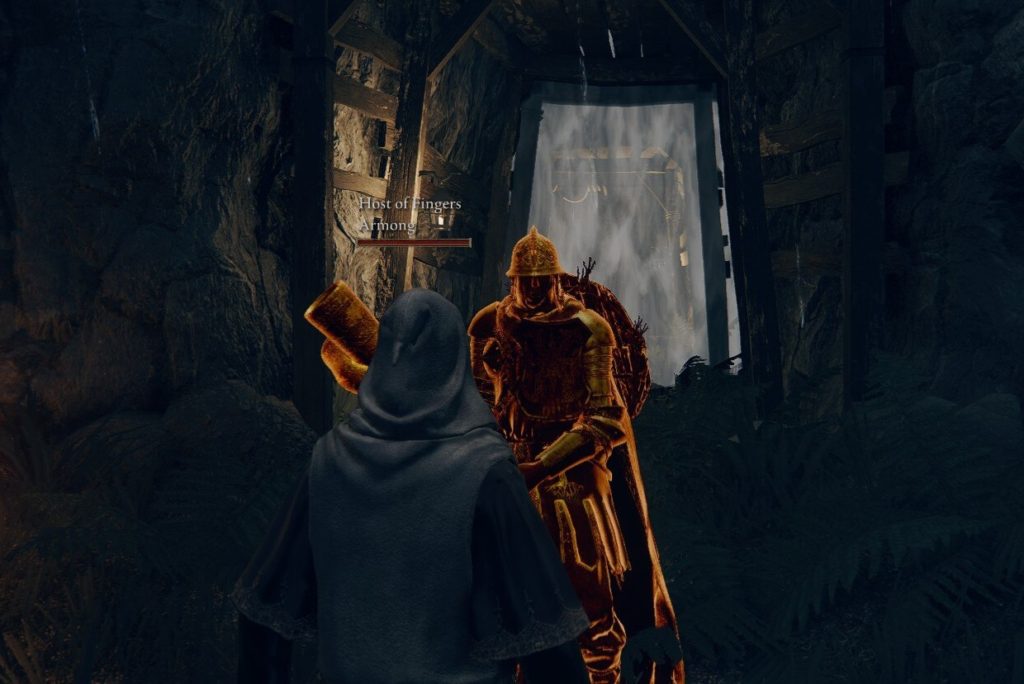
As you can see, not much has changed since Dark Souls 1. During multiplayer sessions in older games, fog walls would pop up to keep the play area fairly limited. I assume the primary reason for this is rendering–you couldn’t just keep the entire map loaded for multiple players to travel in opposing directions in! Especially in a PS3 game. The MP fog walls could be annoying in early areas of the game due to their greater interconnected-ness, but in dungeons it became pretty much unnoticeable. In Dark Souls 3 it was not much of an issue at all because each zone was usually a massive, sprawling area. And frankly, these limitations made sense in games not specifically marketed as massive open world experiences. DS titles before Elden Ring were corridor crawlers–even the largest areas in Dark Souls 3 were broken into linear albeit vertically overlapping paths between bonfires. Elden Ring, however, is a modern open world experience, but the Dark Souls multiplayer system has not been adjusted at all to fit the new paradigm.
So, how do you explore the Limgrave mine with your friend? Well, first you have to disconnect from him. Doing this sends you back to wherever you were before being summoned., which could be very far away. You keep none of the progress you and your buddy made in his world, so you have to retrace your steps alone to the mine. Then you have to enter the the mine and put down a new summoning sign in there. After that, your friend can then summon you and finally resume the jolly cooperation. The whole ordeal is painfully clunky. This summoning sign system was charming in older DS games, but when I have to travel a couple miles just to cross a fog door, the charm is gone. I would have preferred a nice Multiplayer menu that lets me place my sign down right next to whatever bonfire my friend is waiting at. Better yet, I would have preferred a multiplayer system that lets me just teleport to my friend without him having to wait for a summoning sign to appear at all!
I understand why the fog wall is there–the game literally cannot handle rendering the underground and above ground portions at the same time. So why not have an instance gate or something (think World of Warcraft dungeon raids) that lets me and my friend choose to load up a new area together?
The problems with Elden Ring’s open world coop go further than clunky fog doors. When you spend so much time walking across fields, through forests, and over canyons with your buddy, you tend to pass a lot of bonfires and hidden items. The visiting player is not allowed to interact with these things at all. The visitor can thankfully still receive mob drops and gather plants growing in the world, but no exploratory progress carries over when visiting. This makes playing open world coop rather unrewarding for the visitor. Horses are disabled too, which discourages coop play even further. The cherry on top comes when you inevitably die. Since you aren’t activating the same bonfires as the host, you are set back a ton. In short, the fantasy of exploring Elden Ring’s vast landscape with a pal is undercut by a clunky multiplayer system that has persisted since 2010. I wish there was an option to share a world instance with another player. I want the same items, bonfires, and boss progress! You could call it Elden Ring MMO!
A Dark Souls MMO would fail, of course, because FromSoft can’t do netcode. I could ignore all of the above issues if the current system was not laden with bugs. In my play session with Mark, I probably random disconnected four different times. An invader popped into the world behind us and, as I went to confront him, I disconnected randomly. It was unplayable, literally.
I would like to highlight that my criticisms are aimed primarily at the open world segments of the game, specifically the COOP side of it. Invasions in the open world can be quite fun, offering plenty of places to hide and stalk prey (and the free teleportation items solve those instances when you just can’t locate the target). In dungeons, multiplayer gets way better, both COOP and PVP. The more linear progression and tighter play areas hide the flaws inherent in the system, and its frankly just as fun as older titles. I have had tons of fun exploring Raya Lucaria academy with friends and strangers.
I think that’s the way to do it: multiplayer in the open world is rough. If you are adventuring with a friend, skip straight to the dungeons and play those together. Raya Lucaria, Godrick’s Castle, and other zones offer unlimited fun with friends, but big fat Limgrave sucks. Of course, disregard all of this if the random disconnections hit you. You are shit out of luck there, sorry.