AAAAHH

PROPAGANDA #50 (WEAPONIZING SPACE)
May 17, 2024
Propaganda

America, hungry for any excuse to make war, is now sending weapons into space. Will we destroy the very sky too?

It is a little sickening to see the most amazing technology in the world put to work carving up the sky. Will space itself start to be partitioned into owned regions? Russian Space, Chinese Space, American Space? This should be unacceptable. The fact that we can connect every person on the planet to the internet with satellites but don’t is bad enough– now we are threatening to blow up the sky and go dark again.

Propaganda #48
May 17, 2024
Propaganda

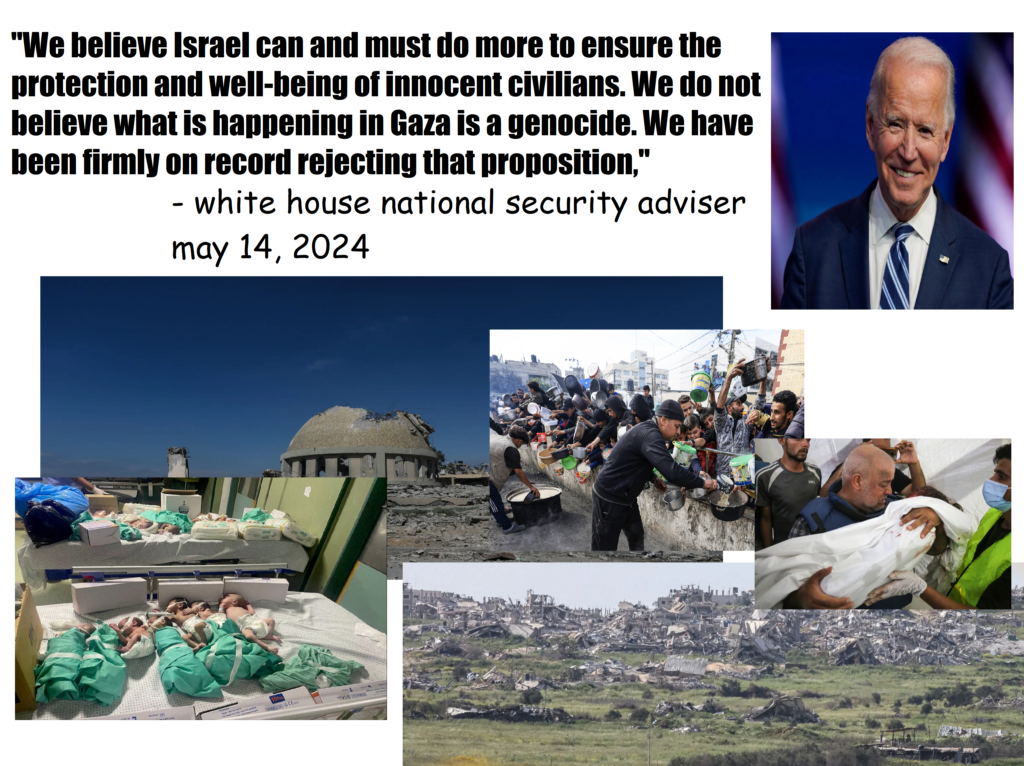
Call it whatever you want.. it is a monstrosity. The destruction of an entire generation’s hopes and dreams. The loss of life would be unacceptable at 5,000. Mincing words after 30,000 is deranged.

Term limits? What are those? The fact that Netanyahu has been allowed to lead Israel for 16 years, twice the term modeled by George Washington himself, is abominable. I thank my stars every day that we do not have a parliamentary system.

Propaganda #47 (Unleash Energy Dominance)
May 15, 2024
Propaganda

“About 20 people attended an April 11 event billed as an ‘energy round table’ at Mr. Trump’s private club, according to those people, who asked not to be identified in order to discuss the private event. Attendees included executives from ExxonMobil, EQT Corporation and the American Petroleum Institute, which lobbies for the oil industry.

The event was organized by the oil billionaire Harold Hamm, who has for years helped to shape Republican energy policies.”

“Unleash energy dominance. Drive our cost down. Sell.” This is purportedly Trump’s plan for stopping inflation and saving America.

Question: is the current price of energy reflective of demand outstripping supply? Is there not enough oil? I don’t think the answer is yes. I want someone to prove me wrong. Please email or DM me if this is something you feel strongly about.

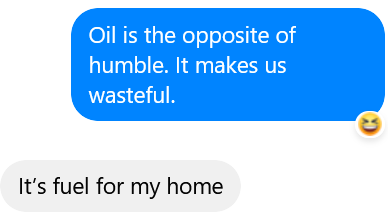
The argument is difficult to have because people point to their high heating bill and say, “bad expensive bad” and correlate that there isn’t enough supply. Like literally we are strapped for heating oil and that is why it is so expensive, as if the valve has been shut off.

I don’t think that’s true, but I don’t have the mental bandwidth to argue it right now.

Routes of inquiry:

Oil production levels are at a record high. So, on a fundamental level, humanity has never had so much fuel. What gives then?

Where is all that energy going? What has changed in our modern lives to increase the demand so massively? More electronics, more air conditioners, higher population?

Or is the price of oil arbitrary, not necessarily driven by supply and demand? I am suspicious. If I am wrong, I want to be proved wrong.

Propaganda #46
April 30, 2024
Propaganda
Propaganda #45
April 26, 2024
Propaganda
College Protest
April 24, 2024
Commentary

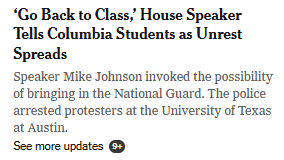
Tolerance of protest is always selective. Universities were extremely defensive of the BLM movement. Israel/Palestine is not as appealing though. We know that Vietnam was a pointless conflict today, but back in 1970, protesting the war in Vietnam made you a dissident. Forces from both sides of the aisle tried to paint the anti-Vietnam War protest as cringe. Law enforcement and even the military were called and used violent force to break up anti-war protests.

We are in a new era of American warfare fought on many new fronts. Will we let conflict in Ukraine and Israel drive us into a killing frenzy?

Anyway, Mike Johnson should maybe stop performing at universities and instead focus on writing up bills for more pressing issues… like the border? Or domestic manufacturing? Or inflation? IDK just spitballing.

https://en.wikipedia.org/wiki/Kent_State_shootings

“The One State Solution” by Edward Said
April 19, 2024
Essay

Originally published on Jan. 10, 1999

Given the collapse of the Netanyahu Government over the Wye peace agreement, it is time to question whether the entire process begun in Oslo in 1993 is the right instrument for bringing peace between Palestinians and Israelis. It is my view that the peace process has in fact put off the real reconciliation that must occur if the hundred-year war between Zionism and the Palestinian people is to end. Oslo set the stage for separation, but real peace can come only with a binational Israeli-Palestinian state.

This is not easy to imagine. The Zionist-Israeli official narrative and the Palestinian one are irreconcilable. Israelis say they waged a war of liberation and so achieved independence; Palestinians say their society was destroyed, most of the population evicted. And, in fact, this irreconcilability was already quite obvious to several generations of early Zionist leaders and thinkers, as of course it was to all Palestinians.

”Zionism was not blind to the presence of Arabs in Palestine,” writes the distinguished Israeli historian Zeev Sternhell in his recent book, ”The Founding Myths of Israel.” ”Even Zionist figures who had never visited the country knew that it was not devoid of inhabitants. At the same time, neither the Zionist movement abroad nor the pioneers who were beginning to settle the country could frame a policy toward the Palestinian national movement. The real reason for this was not a lack of understanding of the problem but a clear recognition of the insurmountable contradiction between the basic objectives of the two sides. If Zionist intellectuals and leaders ignored the Arab dilemma, it was chiefly because they knew that this problem had no solution within the Zionist way of thinking.”

David Ben-Gurion, for instance, was always clear. ”There is no example in history,” he said in 1944, ”of a people saying we agree to renounce our country, let another people come and settle here and outnumber us.” Another Zionist leader, Berl Katznelson, likewise had no illusions that the opposition between Zionist and Palestinian aims could be surmounted. And binationalists like Martin Buber, Judah Magnes and Hannah Arendt were fully aware of what the clash would be like, if it came to fruition, as of course it did.

Vastly outnumbering the Jews, Palestinian Arabs during the period after the 1917 Balfour Declaration and the British Mandate always refused anything that would compromise their dominance. It’s unfair to berate the Palestinians retrospectively for not accepting partition in 1947. Until 1948, Jews held only about 7 percent of the land. Why, the Arabs said when the partition resolution was proposed, should we concede 55 percent of Palestine to the Jews, who were a minority in Palestine? Neither the Balfour Declaration nor the mandate ever specifically conceded that Palestinians had political, as opposed to civil and religious, rights in Palestine. The idea of inequality between Jews and Arabs was therefore built into British, and subsequently Israeli and United States, policy from the start.

The conflict appears intractable because it is a contest over the same land by two peoples who always believed they had valid title to it and who hoped that the other side would in time give up or go away. One side won the war, the other lost, but the contest is as alive as ever. We Palestinians ask why a Jew born in Warsaw or New York has the right to settle here (according to Israel’s Law of Return), whereas we, the people who lived here for centuries, cannot. After 1967, the conflict between us was exacerbated. Years of military occupation have created in the weaker party anger, humiliation and hostility.

To its discredit, Oslo did little to change the situation. Arafat and his dwindling number of supporters were turned into enforcers of Israeli security, while Palestinians were made to endure the humiliation of dreadful and noncontiguous ”homelands” that make up about 10 percent of the West Bank and 60 percent of Gaza. Oslo required us to forget and renounce our history of loss, dispossessed by the very people who taught everyone the importance of not forgetting the past. Thus we are the victims of the victims, the refugees of the refugees.

Israel’s raison d’etre as a state has always been that there should be a separate country, a refuge, exclusively for Jews. Oslo itself was based on the principle of separation between Jews and others, as Yitzhak Rabin tirelessly repeated. Yet over the past 50 years, especially since Israeli settlements were first implanted on the occupied territories in 1967, the lives of Jews have become more and more enmeshed with those of non-Jews.

The effort to separate has occurred simultaneously and paradoxically with the effort to take more and more land, which has in turn meant that Israel has acquired more and more Palestinians. In Israel proper, Palestinians number about one million, almost 20 percent of the population. Among Gaza, East Jerusalem and the West Bank, which is where settlements are the thickest, there are almost 2.5 million Palestinians. Israel has built an entire system of ”bypassing” roads, designed to go around Palestinian towns and villages, connecting settlements and avoiding Arabs. But so tiny is the land area of historical Palestine, so closely intertwined are Israelis and Palestinians, despite their inequality and antipathy, that clean separation simply won’t, can’t really, occur or work. It is estimated that by 2010 there will be demographic parity. What then?

Clearly, a system of privileging Israeli Jews will satisfy neither those who want an entirely homogenous Jewish state nor those who live there but are not Jewish. For the former, Palestinians are an obstacle to be disposed of somehow; for the latter, being Palestinian in a Jewish polity means forever chafing at inferior status. But Israeli Palestinians don’t want to move; they say they are already in their country and refuse any talk of joining a separate Palestinian state, should one come into being. Meanwhile, the impoverishing conditions imposed on Arafat are making it difficult for him to subdue the highly politicized inhabitants of Gaza and the West Bank. These Palestinians have aspirations for self-determination that, contrary to Israeli calculations, show no sign of withering away. It is also evident that as an Arab people — and, given the despondently cold peace treaties between Israel and Egypt and Israel and Jordan, this fact is important — Palestinians want at all costs to preserve their Arab identity as part of the surrounding Arab and Islamic world.

For all this, the problem is that Palestinian self-determination in a separate state is unworkable, just as unworkable as the principle of separation between a demographically mixed, irreversibly connected Arab population without sovereignty and a Jewish population with it. The question, I believe, is not how to devise means for persisting in trying to separate them but to see whether it is possible for them to live together as fairly and peacefully as possible.

What exists now is a disheartening, not to say, bloody, impasse. Zionists in and outside Israel will not give up on their wish for a separate Jewish state; Palestinians want the same thing for themselves, despite having accepted much less from Oslo. Yet in both instances, the idea of a state for ”ourselves” simply flies in the face of the facts: short of ethnic cleansing or ”mass transfer,” as in 1948, there is no way for Israel to get rid of the Palestinians or for Palestinians to wish Israelis away. Neither side has a viable military option against the other, which, I am sorry to say, is why both opted for a peace that so patently tries to accomplish what war couldn’t.

The more that current patterns of Israeli settlement and Palestinian confinement and resistance persist, the less likely it is that there will be real security for either side. It was always patently absurd for Netanyahu’s obsession with security to be couched only in terms of Palestinian compliance with his demands. On the one hand, he and Ariel Sharon crowded Palestinians more and more with their shrill urgings to the settlers to grab what they could. On the other hand, Netanyahu expected such methods to bludgeon Palestinians into accepting everything Israel did, with no reciprocal Israeli measures.

Arafat, backed by Washington, is daily more repressive. Improbably citing the 1936 British Emergency Defense Regulations against Palestinians, he has recently decreed, for example, that it is a crime not only to incite violence, racial and religious strife but also to criticize the peace process. There is no Palestinian constitution or basic law: Arafat simply refuses to accept limitations on his power in light of American and Israeli support for him. Who actually thinks all this can bring Israel security and permanent Palestinian submission?

Violence, hatred and intolerance are bred out of injustice, poverty and a thwarted sense of political fulfillment. Last fall, hundreds of acres of Palestinian land were expropriated by the Israeli Army from the village of Umm al-Fahm, which isn’t in the West Bank but inside Israel. This drove home the fact that, even as Israeli citizens, Palestinians are treated as inferior, as basically a sort of underclass existing in a condition of apartheid.

At the same time, because Israel does not have a constitution either, and because the ultra-Orthodox parties are acquiring more and more political power, there are Israeli Jewish groups and individuals who have begun to organize around the notion of a full secular democracy for all Israeli citizens. The charismatic Azmi Bishara, an Arab member of the Knesset, has also been speaking about enlarging the concept of citizenship as a way to get beyond ethnic and religious criteria that now make Israel in effect an undemocratic state for 20 percent of its population.

In the West Bank, Jerusalem and Gaza, the situation is deeply unstable and exploitative. Protected by the army, Israeli settlers (almost 350,000 of them) live as extraterritorial, privileged people with rights that resident Palestinians do not have. (For example, West Bank Palestinians cannot go to Jerusalem and in 70 percent of the territory are still subject to Israeli military law, with their land available for confiscation.) Israel controls Palestinian water resources and security, as well as exits and entrances. Even the new Gaza airport is under Israeli security control. You don’t need to be an expert to see that this is a prescription for extending, not limiting, conflict. Here the truth must be faced, not avoided or denied.

There are Israeli Jews today who speak candidly about ”post-Zionism,” insofar as after 50 years of Israeli history, classic Zionism has neither provided a solution to the Palestinian presence nor an exclusively Jewish presence. I see no other way than to begin now to speak about sharing the land that has thrust us together, sharing it in a truly democratic way, with equal rights for each citizen. There can be no reconciliation unless both peoples, two communities of suffering, resolve that their existence is a secular fact, and that it has to be dealt with as such.

This does not mean a diminishing of Jewish life as Jewish life or a surrendering of Palestinian Arab aspirations and political existence. On the contrary, it means self-determination for both peoples. But it does mean being willing to soften, lessen and finally give up special status for one people at the expense of the other. The Law of Return for Jews and the right of return for Palestinian refugees have to be considered and trimmed together. Both the notions of Greater Israel as the land of the Jewish people given to them by God and of Palestine as an Arab land that cannot be alienated from the Arab homeland need to be reduced in scale and exclusivity.

Interestingly, the millennia-long history of Palestine provides at least two precedents for thinking in such secular and modest terms. First, Palestine is and haas always been a land of many histories; it is a radical simplification to think of it as principally or exclusively Jewish or Arab. While the Jewish presence is longstanding, it is by no means the main one. Other tenants have included Canaanites, Moabites, Jebusites and Philistines in ancient times, and Romans, Ottomans, Byzantines and Crusaders in the modern ages. Palestine is multicultural, multiethnic, multireligious. There is as little historical justification for homogeneity as there is for notions of national or ethnic and religious purity today.

Second, during the interwar period, a small but important group of Jewish thinkers (Judah Magnes, Buber, Arendt and others) argued and agitated for a binational state. The logic of Zionism naturally overwhelmed their efforts, but the idea is alive today here and there among Jewish and Arab individuals frustrated with the evident insufficiencies and depredations of the present. The essence of their vision is coexistence and sharing in ways that require an innovative, daring and theoretical willingness to get beyond the arid stalemate of assertion and rejection. Once the initial acknowledgment of the other as an equal is made, I believe the way forward becomes not only possible but also attractive.

The initial step, however, is a very difficult one to take. Israeli Jews are insulated from the Palestinian reality; most of them say that it does not really concern them. I remember the first time I drove from Ramallah into Israel, thinking it was like going straight from Bangladesh into Southern California. Yet reality is never that neat.

My generation of Palestinians, still reeling from the shock of losing everything in 1948, find it nearly impossible to accept that their homes and farms were taken over by another people. I see no way of evading the fact that in 1948 one people displaced another, thereby committing a grave injustice. Reading Palestinian and Jewish history together not only gives the tragedies of the Holocaust and of what subsequently happened to the Palestinians their full force but also reveals how in the course of interrelated Israeli and Palestinian life since 1948, one people, the Palestinians, has borne a disproportional share of the pain and loss.

Religious and right-wing Israelis and their supporters have no problem with such a formulation. Yes, they say, we won, but that’s how it should be. This land is the land of Israel, not of anyone else. I heard those words from an Israeli soldier guarding a bulldozer that was destroying a West Bank Palestinian’s field (its owner helplessly watching) to expand a bypass road.

But they are not the only Israelis. For others, who want peace as a result of reconciliation, there is dissatisfaction with the religious parties’ increasing hold on Israeli life and Oslo’s unfairness and frustrations. Many such Israelis demonstrate against their Government’s Palestinian land expropriations and house demolitions. So you sense a healthy willingness to look elsewhere for peace than in land-grabbing and suicide bombs.

For some Palestinians, because they are the weaker party, the losers, giving up on a full restoration of Arab Palestine is giving up on their own history. Most others, however, especially my children’s generation, are skeptical of their elders and look more unconventionally toward the future, beyond conflict and unending loss. Obviously, the establishments in both communities are too tied to present ”pragmatic” currents of thought and political formations to venture anything more risky, but a few others (Palestinian and Israeli) have begun to formulate radical alternatives to the status quo. They refuse to accept the limitations of Oslo, what one Israeli scholar has called ”peace without Palestinians,” while others tell me that the real struggle is over equal rights for Arabs and Jews, not a separate, necessarily dependent and weak Palestinian entity.

The beginning is to develop something entirely missing from both Israeli and Palestinian realities today: the idea and practice of citizenship, not of ethnic or racial community, as the main vehicle for coexistence. In a modern state, all its members are citizens by virtue of their presence and the sharing of rights and responsibilities. Citizenship therefore entitles an Israeli Jew and a Palestinian Arab to the same privileges and resources. A constitution and a bill of rights thus become necessary for getting beyond Square 1 of the conflict because each group would have the same right to self-determination; that is, the right to practice communal life in its own (Jewish or Palestinian) way, perhaps in federated cantons, with a joint capital in Jerusalem, equal access to land and inalienable secular and juridical rights. Neither side should be held hostage to religious extremists.

Yet feelings of persecution, suffering and victimhood are so ingrained that it is nearly impossible to undertake political initiatives that hold Jews and Arabs to the same general principles of civil equality while avoiding the pitfall of us-versus-them. Palestinian intellectuals need to express their case directly to Israelis, in public forums, universities and the media. The challenge is both to and within civil society, which has long been subordinate to a nationalism that has developed into an obstacle to reconciliation. Moreover, the degradation of discourse — symbolized by Arafat and Netanyahu trading charges while Palestinian rights are compromised by exaggerated ”security” concerns — impedes any wider, more generous perpective from emerging.

The alternatives are unpleasantly simple: either the war continues (along with the onerous cost of the current peace process) or a way out, based on peace and equality (as in South Africa after apartheid) is actively sought, despite the many obstacles. Once we grant that Palestinians and Israelis are there to stay, then the decent conclusion has to be the need for peaceful coexistence and genuine reconciliation. Real self-determination. Unfortunately, injustice and belligerence don’t diminish by themselves: they have to be attacked by all concerned.

PROPAGANDA #44 (Trump’s Civil War)
April 17, 2024
Propaganda
PROPAGANDA #43 (Trump’s Jewish Litmus Test)
April 17, 2024
Commentary
Propaganda

There is a change happening among Jews right now that I fear will divide us forever. Before, if you were a Jew, you were a Jew. You helped other Jews out, you were family no matter how long you knew them for. Political forces are working very hard now to drive a wedge into that bond. There are people that want to attach Jewishness to a set of political ideas, a code of authenticity in the brain. “Do you support Israel?” “Do you sympathize with Hamas?” “Wasn’t it awful how those Hamas savages fingered any Jewish woman they could get their hands on with their disgusting finger nails?” (That last one is a real thing someone said to me).

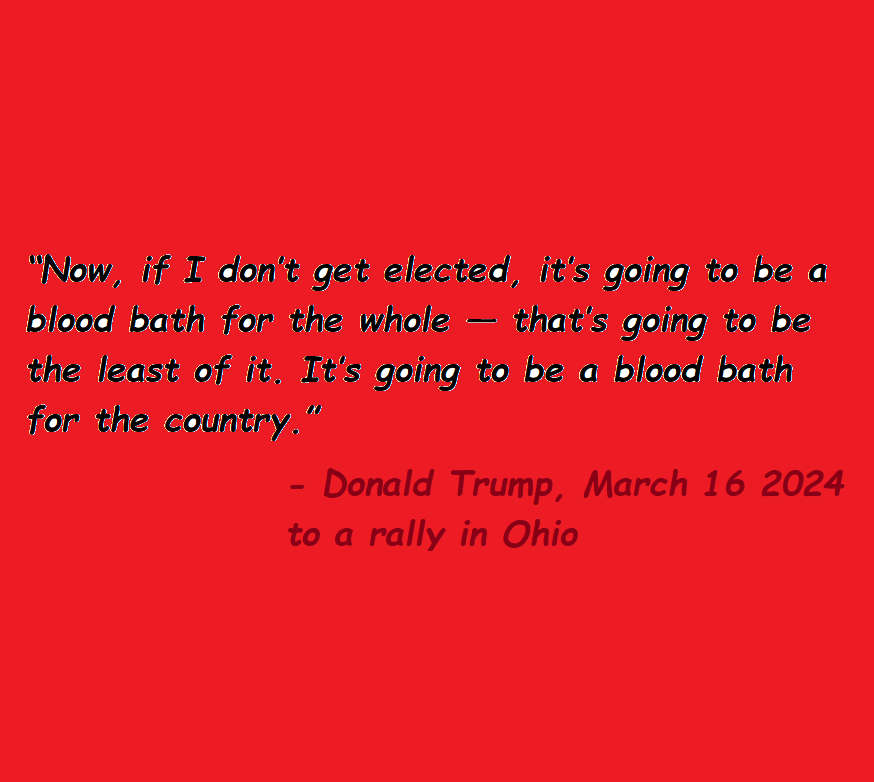
Tensions are very high right now, and Donald Trump has been busy fanning the flames of division:

Trump has been saying stuff like this for a long time. One of my earliest propaganda posts from 2022 was about this very subject: https://www.aaaahh.net/propaganda-8/

I greatly resent this trend. We ask to be born a Jew just as much as anybody can ask to be born a Palestinian, or a Christian, or Black, or short, or with weird ears. We grow up with our beliefs and our heritage and our history and we track our own course in life. To assign Jewishness to a nationality, a place, Israel, is coercive. And certainly, nobody is allowed to say you are or aren’t Jewish enough. Especially somebody that isn’t Jewish. You can’t make a political test of it, that’s for damn sure.

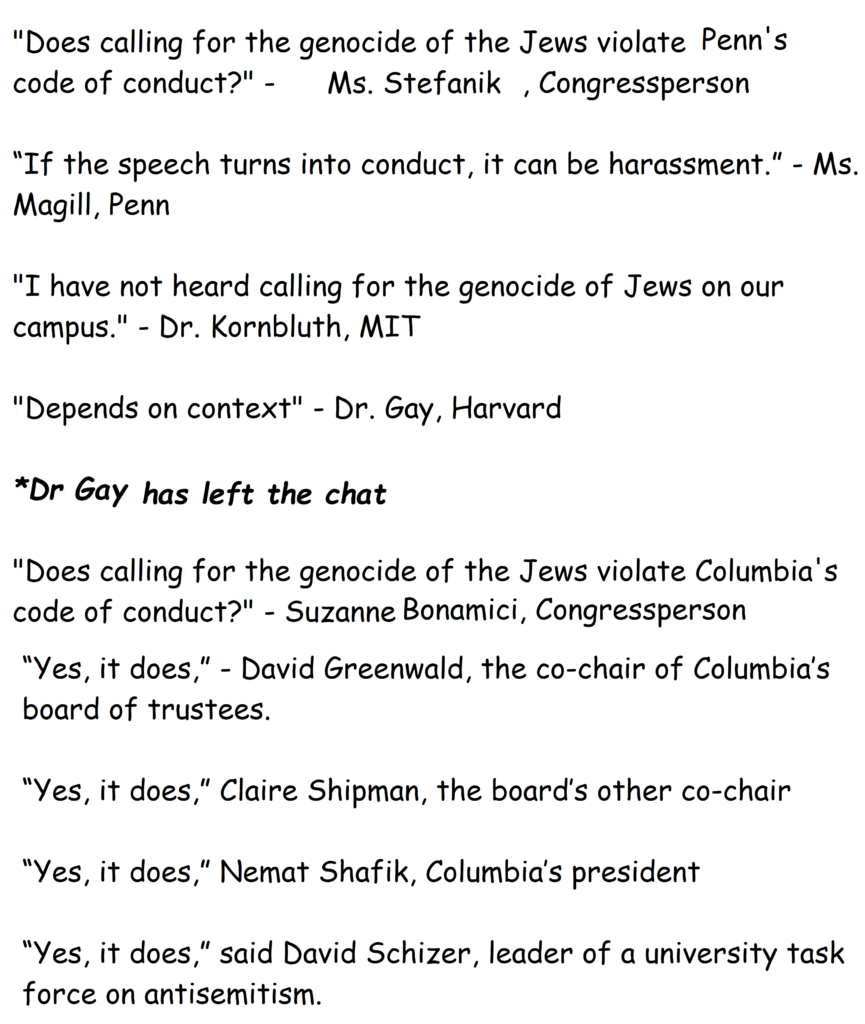
Now congress, instead of writing laws and fixing our country, is busy quizzing college boards to see if they respond with a sufficient degree of subservience to the narrative being written for us. Freedom of speech be damned!

Plastic Addiction
April 5, 2024
Commentary

Americans have not slowed their purchase of plastic. On the contrary, disposable plastic consumption continues to grow and is expected to grow for decades to come. Besides the physical largeness of our bodies, there is probably no greater marker of American gluttony than the landfills that we have created to hold all the plastic waste we produce. Great heaps of indestructible trash! Particles that will not degrade for a thousand years!

Lloyd Stouffer, 1963

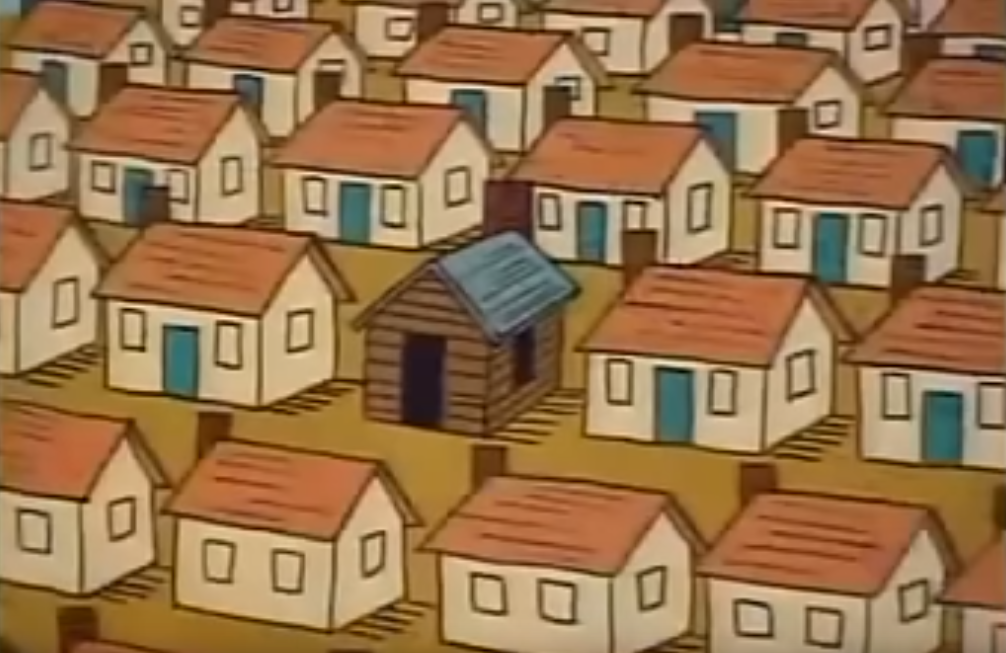
This is a new problem, less than a century old. Before WWII, tin and glass were the means of transporting things. You had jars and cans and wax paper. Our infrastructure has forsaken these materials in favor of oil-based plastics whose composition is non-standardized and largely unrecyclable.

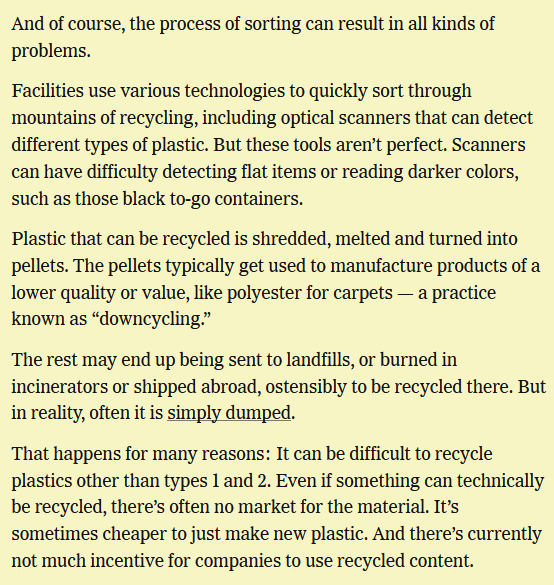
Yes, unrecyclable. I think a lot of people have this idea in their mind that plastic is some sort of metal that can be melted down and reformed infinitely. No, plastic “recycling” is mostly “downcycling,” shredding and transforming used plastic into a lower quality plastic that will be used maybe once more to make another disposable product. Your water bottle does not get magically reforged into a perfect new water bottle when you toss it into the recycling bin. Hell, it probably isn’t being recycled at all.

There is no mandate on recycling. It is a market business where the transformed plastic product needs to be purchased by a company looking to use it. But in a world where simply making new, high quality plastic is CHEAP CHEAP CHEAP, why would anyone buy crappy recycled plastics? The whole thing is a fantasy maintained to make people feel better about their wasteful lifestyles.

The solution, thankfully, is pretty easy. Close your wallet to plastic products. Stop buying them. Hell, even if your tap water is bad, you can purchase refillable drums of water at Costco. Don’t use the plastic containers of fruits and veggies, grab them from the bin and put them in a paper bag. Stop using the little floss picks. Grab some standard size glass containers instead of getting a whole new set of plastic tupperware when you inevitably lose the lids to them. Just stop buying plastic?

On a legislative level, our congressional leaders could write up regulation to standardize plastic. Standard sizes, standard lids, standard composition. Such rules would make it easier to reuse the plastics that enter our lives. The greatest legislation of all would be to ban plastic outright, declare it an evil material. Glass and metal can be melted down and reformed again and again. We would be better served to return to that way of life.

Dune: Part 2, First Impression (SPOILERS!)
March 30, 2024
Review
Worm

I am about to go see Dune AGAIN, so I figured I better get my thoughts down from the first viewing before the second one inevitably changes thing…

You know we love to to see the Princess Irulan

First off: incredible sets. The technology, from Irulan’s etching device to the Harkonnen spicing suits, strikes a perfect primitive-futurism that Dune is marked by. Levitation is on full display. STUNNING! What can I say but that? This movie is beautiful.

Timothee Chalamet is a perfect little ego freak, though I sometimes wonder if that was intentional. Whenever he gets close to spice, he gets kind of manic. His love with Zendaya is sometimes even believable!

Feyd Rautha gets boxed. He gets Gom Jabar’d. The scene is hilarious. Instead of showing Count Fenring’s side, the movie gives us Lady Fenring collecting genetic material from Feyd. Feyd is a weird baldy by the way. Totally new interpretation of the character, and I love it!

Love Geidi Prime. They make it alien as hell. Its like a new kind of atmosphere. Glad to have seen it on the big screen.

No acid trip orgy. 🙁
Like the previous movie, the directors opted to make The Water of Life really solemn and weird. The fremen don’t just throw a spice party.

SEITCH TABUR, ESPECIALLY THE WATER ROOM, IS SOOOO COOOL OMG!!!

They chose to make Paul’s mom the soft antagonist of the movie. She goes psycho after drinking the worm piss and it is not made clear if she is talking to herself or unborn Alia. They REALLY play up the “Bene Geseret are manipulating the local population” theme, to the detriment of the film IMO.

Alia never gets born. 🙁
So no, Mr. Harkonen doesn’t get gom jabar’d. He gets stabbed in the neck by Paul. Not a satisfying revenge scene in the slightest. Oh well!

WORM RIDING IS SO COOL OMG. Paul riding his first worm is wild. The gondolas on the worms are wild!

Feyd Rautha is Tom Brady’s son.

Reverand Mother Gaius Helen Mohiam does scream “abomination,” but at Paul instead of Alia. Paul’s ascendency is not triumphant at all. It is cast as a descent into evil. The movie ends on a really downer note, which is a shame. The book ending is ultra triumphant even despite the impending Jihad. The director failed to translate a certain degree of hype and pacing, which is understandable. Dune, as un-adaptable as it is, manages to find a good home in Dune: Part 2.

The ending was not a true ending, however, which leads me to think they are banking HEAVILY on a Dune Messiah/Dune: Part 3!

PROPAGANDA #42
March 28, 2024
Propaganda

So many modern lines of belief are based on apocalypticism. People have convinced themselves that the end is coming. They don’t anticipate, however, that this end may come in the form of a new hyperspace bypass.

Preamble to the US Constitution
March 28, 2024
Art

“We the People of the United States, in Order to form a more perfect Union, establish Justice, insure domestic Tranquility, provide for the common defense, promote the general Welfare, and secure the Blessings of Liberty to ourselves and our Posterity, do ordain and establish this Constitution for the United States of America.”

Which is to say plainly, that promoting the general welfare of everybody is just as important as providing for the common defense.

PROPAGANDA #41 (TIK TOK!)
March 14, 2024
Propaganda

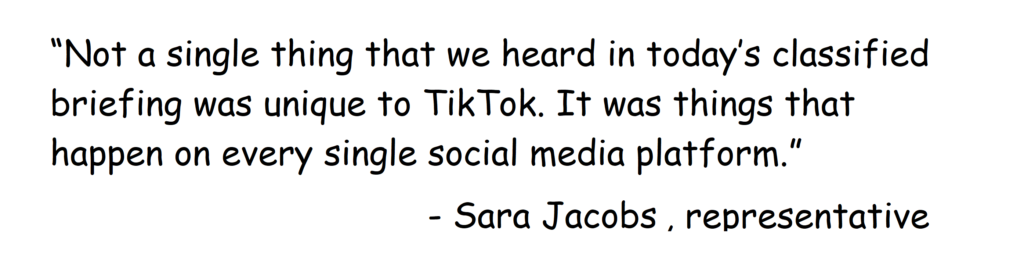
Banning Tik Tok is missing the forest for the trees. The fact that having an app on your phone is able to hemorrhage so much sensitive data about individuals is indicative of a serious lack of security in our technology. Phone manufacturers and regulators are taking almost zero steps to safeguard our anonymity online. Our location, personal information, and even the contents of our camera roll are within easy reach.

A smart law would attack the root of the problem: enshrining a right to privacy into law and working with phone manufacturers to give users complete control over the information they share with external sources! We are in tech-hell right now. We buy the phones but do not control them. They spy on us.

I have learned so many things from Tik Tok and similar Vine-style content platforms. I would not be baking a loaf of bread every day or experimenting with wood working had I not been exposed to these things through short form video content. Sending Instagram videos to my friends is one of my favorite ways to stay connected with people online, and some of them have made me laugh harder than I have laughed in years.

I believe that banning Tik Tok is a serious breach of my right to free speech and expression as enshrined in the constitution. Banning Tik Tok is also a gross admission by our lawmakers that they have no interest in tackling the lack of privacy that US citizens have while engaging with the technology that has been forced on us since birth. Let the Luddites crawl into their caves–the answer to our modern problems is not to arbitrarily ban things… we must push forward with a critical eye and a desire to live free.

Congressional Pushback Against Bibi Netanyahu Grows
March 14, 2024
Commentary

“After meeting with Bibi for three minutes … I stopped Bibi in the middle of a sentence. I said, ‘Bibi, you don’t want to make a deal. Do you?’ And he said, ‘Well, uh, uh uh’— and the fact is, I don’t think Bibi ever wanted to make a deal.”

– Donald Trump, 2021

If Israel wanted to achieve a two-state solution, it could do so today. The fact of the matter is that Israel’s government, composed of pro-settler politicians and backed by the most conservative Jews, doesn’t want a Palestinian state. Even Donald Trump, a staunch supporter of Israel’s right to do as it pleases, quickly recognized that Benjamin Netanyahu was not interested in the prospect of giving up any land. Statehood is a carrot on a stick that has been dangled for decades, but Israel’s prime minister has never been willing to make the ultimate concession of land necessary to actually bring it to life. Instead, settlement building has continued and apartheid conditions worsened. In 2023, before the Oct. 7 attack, over 200 Palestinians in the West Bank had already been killed and countless more injured. In June, Israel used fighter jets to bomb cities in the West Bank. The list goes on; Israel has not acted in a way that promotes peace. It has not worked to build a future that includes the Palestinian people.

Today, Chuck Schumer got up on a podium and declared, “[Netanyahu] has been too willing to tolerate the civilian toll in Gaza, which is pushing support for Israel worldwide to historic lows. Israel cannot survive if it becomes a pariah.” He criticized the Prime Minister further, noting that Bibi “won’t commit to a military operation in Rafah that prioritizes protecting civilian life. […] He won’t engage responsibly in discussions about a ‘day after’ plan for Gaza, and a longer-term pathway to peace.” To any outside observer, it is clear that Netanyahu’s government has no plan whatsoever beyond war. War with Hamas is more important than protecting civilian life, ending settlements, or finding a solution to the Palestinian problem that Israel has continuously declined to resolve since its founding in 1948. Is the relentless killing of thine enemies a core tenet of the Jewish faith? I don’t think so, but Israelis have adopted it nonetheless. Schumer called for new elections in Israel to bring some fresh blood into this Israeli political dilemma.

Chuck Schumer’s acknowledgement of the reality of Netanyahu’s intentions is a major breakthrough in American politics, but it remains to be seen if the words can be backed by policy. Schumer threatened that if Israel does not change course “then the United States will have no choice but to play a more active role in shaping Israeli policy by using our leverage to change the present course.” If America began to limit its funding of the Israeli War Machine in response to Israel’s anti-Palestinian policies, then there is a real chance that Israel could change course. Of course, money doesn’t change minds. For Israel to truly change, the people living inside of it need to change. As it stands, it seems like a majority of Israelis are either apathetic or openly hostile to the idea of extending rights to the Palestinian people. They just don’t care.

Republicans argue that Pro-Palestinian Ideas = Anti-Israel Ideas

Senate Republicans of course balked at Schumer’s statements. Mitch McConnell retorted by claiming that “the Democratic Party doesn’t have an anti-Bibi problem, it has an anti-Israel problem.” McConnel is arguing in very bad faith here, since the human rights of Palestinian children under bombardment have absolutely nothing to do with Israel’s right to exist as a state. Mitch went further to call Americans “who hyperventilate about foreign interference in our own democracy to call for the removal of the democratically elected leader of Israel” “grotesque and hypocritical”. As if America has not been assassinating the leaders of other countries for decades. Republicans have this flawed image in their mind of Israel as a bastion of Democracy in a dark and theocratic middle east… yet Israel routinely denies a large portion of the people living within its borders the right to vote, justifies the seizure of their land, and bombs them. If the American Military bombed Boston claiming that they were targeting political dissidents or terrorists, there would be a massive uproar. It would be an act of totalitarianism worthy of a civil war. Israel is, according to Republicans, well within its right to do this. I suppose it makes sense that the same party that opposed the Civil Rights Bill of 1964 would be a proponent of Israel’s own segregationist tendencies.

If the democrats are able to continuously challenge their own beliefs and eventually apply real pressure to Israel, then they may have a chance of winning in 2024. If they cannot differentiate themselves from Republicans on Israeli policy, then the democrats will hemorrhage votes and likely lose. If the worst happens and the Republicans do manage to win in November, I wonder if Biden and Schumer will be able to connect the dots? Regardless, the developments seen today are promising. More must be done.