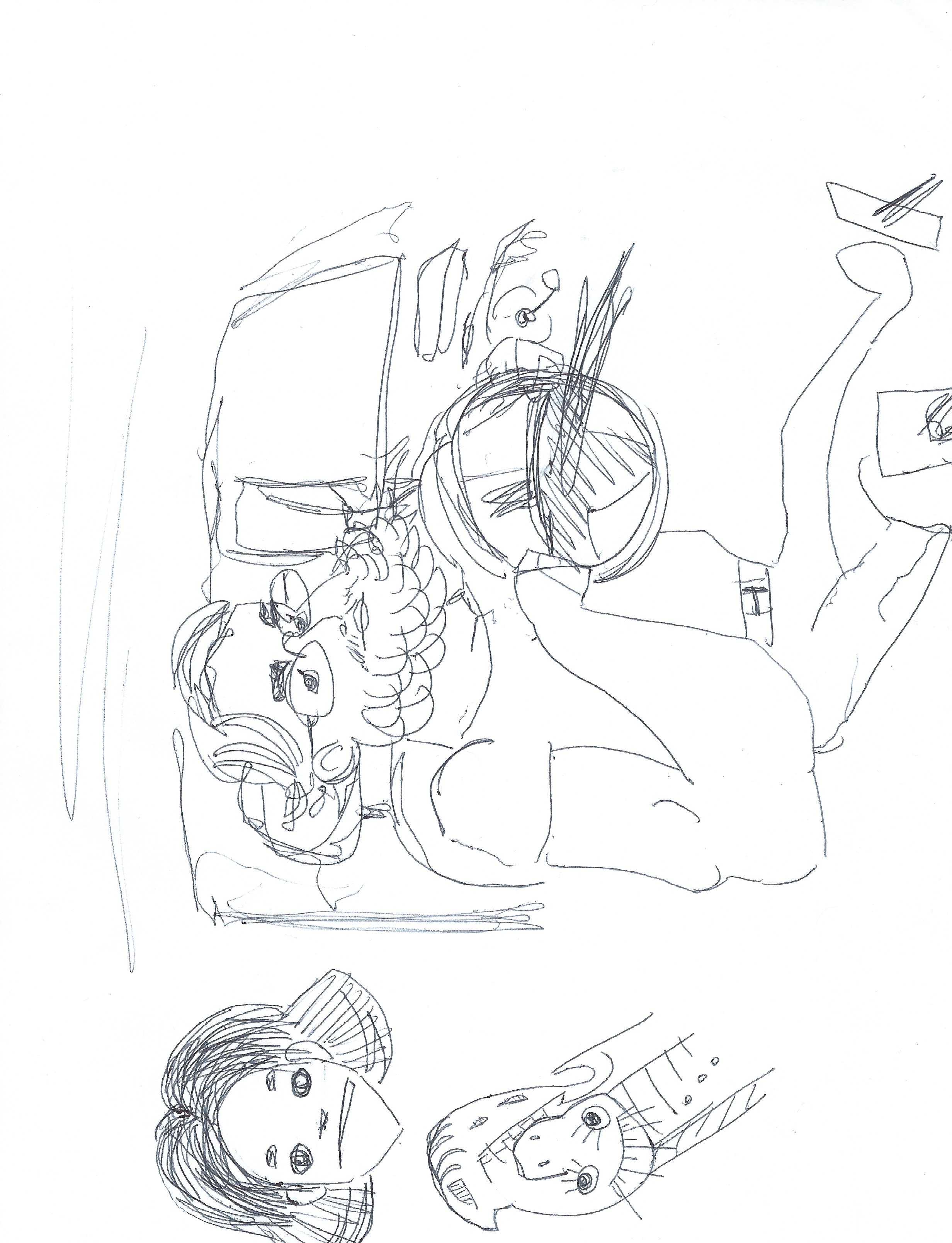
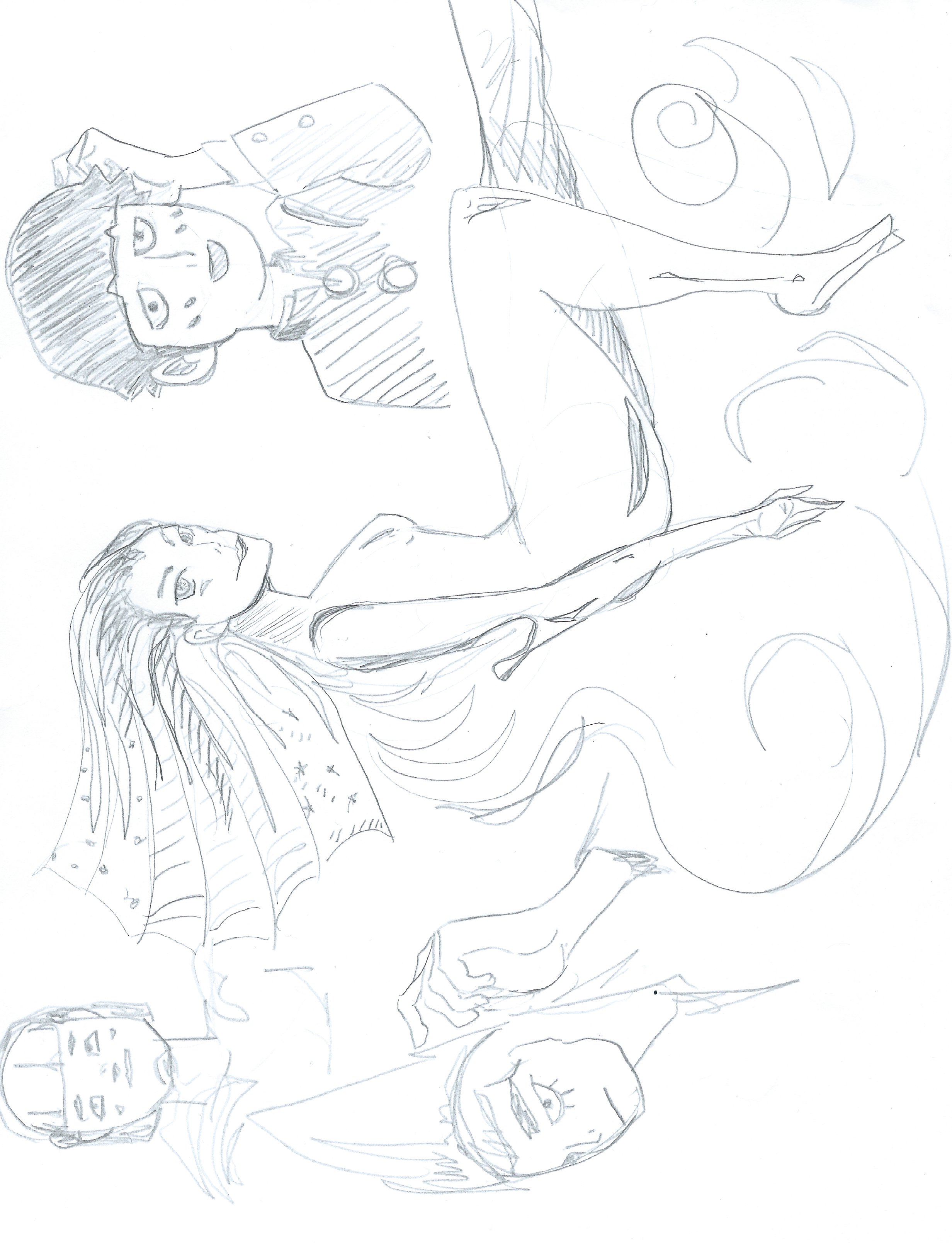
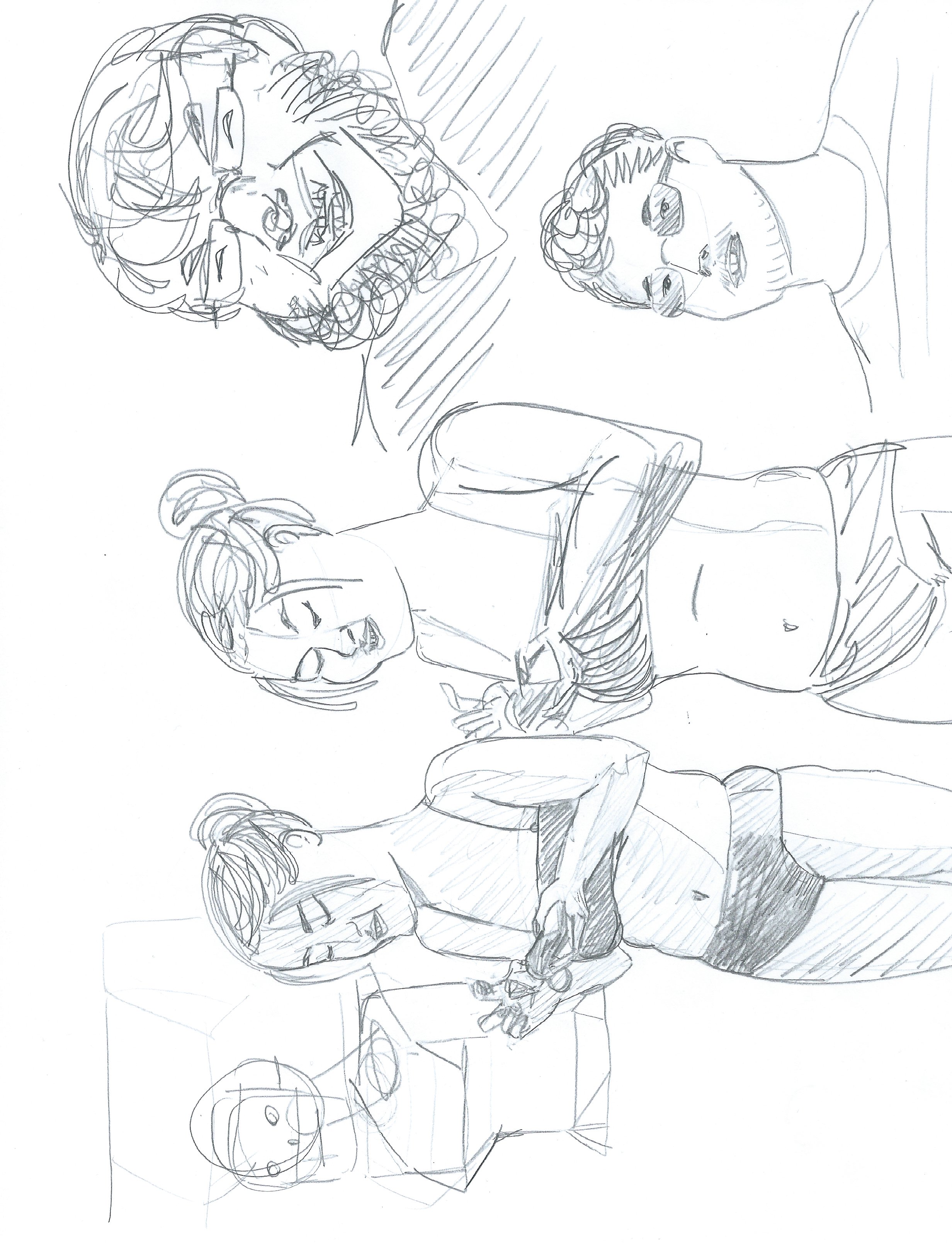
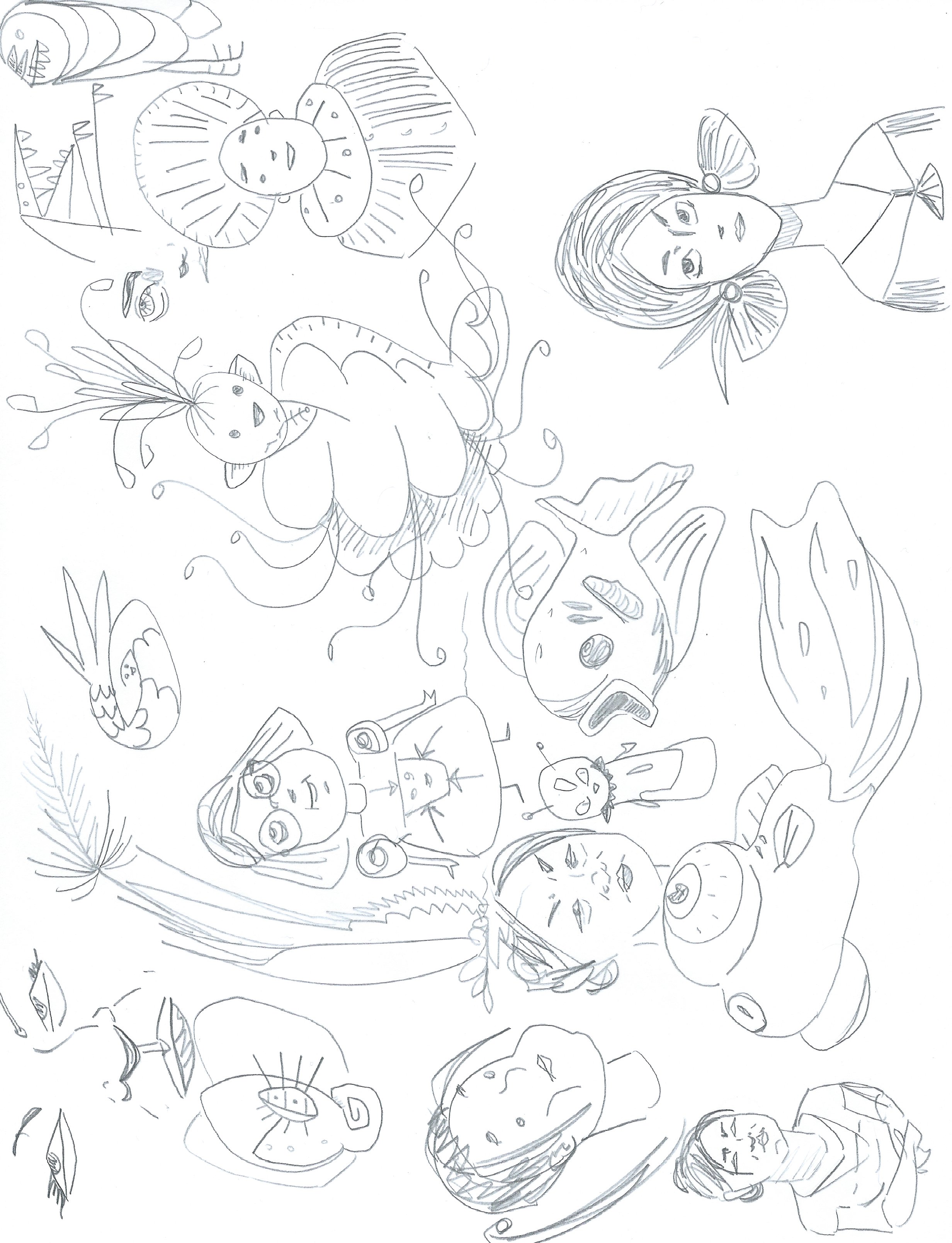
AAAAHH

A Poetry Reading
April 5, 2021
Poetry
Video

I produced this video recently:

It isn’t my best work, but it was good to brush up on my editing knowledge. I used to work in a pirated version of Sony Vegas, so I have had to transition to Premiere.

The poem is “To the Naked Mole Rats at the National Zoo” by Steph Burt.

Baron Azuroscuro II
March 23, 2021
Poetry

Art assignment deferred,

Deadline tomorrow.

So seek the monolith,

Go forth to the Rose.


Descend the bone bleached step spiral

Skirt the divider and enter

The Lois Foster Gallery.

There it is,

Big, blue,

Impossible.


Approach that sovereign form,

God of canvas,

Dominator of the gallery floor.

Mindfucker, postmodern trash

Made of trash.


The lord bristles with spikes,

Glass shards, plastic knots

Like tree burls loaded with

Parasitic wasps.


Ten, twelve feet tall.

Solid blue turns to ripples,

Curved rings of swirls of paint on paint,

Depictions of brush strokes.

Painting paint. Painting

The act of painting.

Can you believe that?


Oceanic breadth,

It could still be wet, you wouldn’t know.

Bubbles of aquamarine, royal suede.

You could touch it,

Step inside it.

Instant transmission,

Blue Planet.


Before you know it,

The kingly portal has devoured your field of view.

It’s too wide for this place,

It should be locked up,

Or torn to shreds.

How long have you been here?


Ushering in the Fascist Millennium
March 22, 2021
Essay

An essay exploring the dark potential of the Atomic Apocalypse in Dr. Strangelove

* * *

The glorious detail that trails most apocalyptic texts is, as it is put in Daniel, the “reward at the end of days.” In Ezekiel, the enemies of Israel are slain en masse and its people are allowed to return and live unafraid. The apocalyptic reward seems at its greatest in Revelation, which promises a “new heaven and a new earth” and an end to darkness for the chosen survivors of the end of the world. Even many modern scientific apocalypses cannot resist the urge to deliver this kind of happy ending, but there are other writers that have suggested that the fabled apocalyptic survival scenario cannot possibly result in moral good. Stanley Kubrick’s Dr. Strangelove provides a vision of apocalypse that rests on uncomfortable ground. Though humanity is promised a method of survival by the titular Nazi scientist, it is apparent that this new millennium will be dominated by fascist ideals and regressive ideology. Even the war itself, run by generals obsessed with death, seems somehow undivine. Dr. Strangelove criticizes the premillennial fascination with building a new world from catastrophe by highlighting the Darwinian tendencies and moral hypocrisy of the strain of humanity likely to actually survive into the new millennium, and Kubrick succeeds in this satire by maintaining a non-secular vision of the Cold War charged by revelations and a biblical adherence to massive death and procedural exactitude.

            In satirizing the biblical apocalyptic model, Kubrick questions the notion that good triumphs in the face of calamity. The conclusion to the film sees the inhabitants of the war room discussing the possibility of living underground in mineshafts to escape the wrath of the bombs—a situation that is evocative of the final imagery of Revelation six. The bible passage in question tells of an earthquake brought about by the opening of the sixth seal, an event that sends the “kings of the earth and the magnates and the generals and the rich and the powerful, and everyone, slave and free” to seek refuge within “the caves and among the rocks of the mountains” in order to escape the wrath of the lamb. In the biblical narrative, cataclysm is an equalizing power that brings kings and slaves alike back to the earth. It is unsurprising that an atomic cataclysm would send humanity underground as well, but there is nothing egalitarian about Kubrick’s vision of the descent of mankind. The idea is broached by none other than Dr. Strangelove himself, who rapidly concludes that a computer, programmed to seek eugenic traits like “health, sexual fertility” and “intelligence,” could decide who is allowed subterranean shelter and survive the doom. Of course, the president and his entourage of generals get a free pass in order to preserve “leadership and tradition,” and “females” will be reduced to breeding mares ten to a single man. These ideas send the scientist into an excited Nazi tizzy. In the absence of God, cataclysm offers an opportunity for selection.

            Apocalyptic fascist ideation is not new to Dr. Strangelove—older works of scientific apocalypse like H. G. Wells’s The War of the Worlds also play with the suggestion that an underground or fleeing humanity is likely to indulge in selective processes against its own perceived weaknesses. The artilleryman that Wells’s protagonist reunites with in the final segment of the novel declares that he means to live underground and form a society in which “life is real again” (Wells, 256). In his proposed configuration, “the useless and cumbersome and mischievous have to die. They ought to die” (Wells, 256). This potential reality is conveniently and optimistically avoided; the Martians have already succumbed to Earth’s bacteria. American authors appear more willing to explore the ramifications of humanity surviving a doomed Earth. Lisa Vox’s essay on “Race, Technology, and The Apocalypse” notes a particular work by Philip Wylie and Edwin Balmer, When Worlds Collide, in which the earth is destroyed and “a small remnant of humanity” flees to another planet, the “new earth” of revelation made literal. This flight is ideologically charged, with one survivor noting, “I cannot regret that the world which was afflicted by us is flying in fragments, utterly incapable of rehabilitation.” The questions that go unasked: who is privileged to survive, and what is the perspective of this new, supposedly better civilization? Kubrick’s work answers this question with startling pessimism: the strong and ideologically ruthless will sculpt a world even more fit for their exploitation than the old one.

            The suggestion that the post-apocalypse world might not be a utopia seems to affront the basic scheme of the Christian apocalypse. Central to biblical apocalypse is the notion of the millennium: the peaceful epoch either directly following (premillennialism) or preceding (postmillennialism) the second coming of Christ. Vox argues that a premillennialist “belief in a final judgment and destruction of the world followed by a millennium of peace” ruled among Christian writers after the civil war. Like the characters in Wylie and Balmer’s story, social change without cataclysm is seen as an impossibility in a world overly corrupted by sin (and the context she provides of a post-reconstruction south all but assumes racial tensions as a major catalyst of these feelings). Purging the world in preparation for the millennium necessarily assumes that specific groups of people must be left for dead, and this is how apocalypses like Ezekiel and Revelation play out. Goodness is assumed in the survivors in these narratives because they are chosen by God, but this dichotomy is muddied by the context of the Cold War. Ideology supplants Christian morality. The satanic barbarians, the Gog, of the latter twentieth century becomes the Russians, and MIT scholar Norbert Weiner noted in 1950 that the American “probability of annihilation would remain high” because of “rigid propaganda which makes the destruction of Russia appear more important than our own survival.” Justice can only be derived from this conflict if America is morally good and the Soviets inherently bad, and Dr. Strangelove toys with this assumption without conceding to propaganda.

            Kubrick’s film satirizes atomic apocalypticism by highlighting the Cold War as not only an ideological struggle, but a Christian one against atheistic communists. Despite its emphasis on science and bureaucracy, Kubrick’s film is a parody of non-secularism. General Turgidson reminds his girlfriend to “say your prayers” over the phone, and he blankly calls the Russian ambassador a “degenerate atheist communist” (Kubrick, 31:10 & 37:25). Turgidson’s religious flair is particularly ironic/amusing because he’s an unmarried sexual maniac. While Strangelove describes that every mineshaft man, in order to breed most prodigiously, must be paired with ten women, the shot is fixed on the Turgidson, who turns to face Strangelove inquisitively. His eyebrows slowly lift in delight and his mouth gapes, and he eventually asks with faux concern whether Strangelove’s plan would “necessitate the abandonment of the so called monogamous sexual relationship,” even after he promises his secretary that he was going to marry her at the start of the film (Kubrick, 1:30:00-1:31:20). The survival kit that outfits every pilot on the B-52 conspicuously contains “one miniature combination Russian phrase book and bible,” so that perhaps the soldiers can be both spiritually and physically fortified by the word of God in enemy terrain. If the pilots do not feel like soldiers of God, the generals vying for the war in the first place certainly do.

            It goes without saying that divine revelation itself is a central trait of biblical apocalypse narratives (though it is an element seemingly not noted in many works of scientific apocalypse), but Dr. Strangelove showcases a twisted prophet of its own in General Ripper. Mandrake begs Ripper to explain his strange theory about bodily fluids and communist plots that justify nuclear war, and the general responds that he “first became aware of it” during sex (Kubrick, 57:00). The use of language here is strange—it is as if the knowledge were a cosmic fact that came to Ripper from the mists of his post-coital fugue. He uses the word “interpret” to describe his realization, and though his idea that women “sense his power” and must be rebuked lest they suck out his “life essence” seems absurd, is it not the fornication of the whore of Babylon that tempts the fall of man in Revelation? Sex is the great metaphorical sin of the Revelation narrative, and Ripper is actually the only general to disavow sex in contrast to an entire war room of eager mineshaft-fornicators. There is even the suggestion of final judgement in Kubrick’s apocalypse: “I happen to believe in a life after this one, and I know I’ll have to answer for what I’ve done. And I think I can” (Kubrick, 1:00:00). Ripper is self-assured in his visions and the righteousness of his actions, though his sweaty face betrays intense nerves. Even this anxious, uncertain adherence is reminiscent of the biblical apocalypse.

            Kubrick’s greatest parody is also his most obvious one: the incredible loss of life that the apocalypse entails is not only justifiable, but it is also coldly calculated with a startling precision. The numbers have been worked out in both Revelation and Strangelove. The angels released to slay humanity at the blowing of the sixth trumpet in Revelation cull “a third of mankind,” and the number of those marked by God to stand behind the lamb are “one hundred forty-four thousand.” The number of the millions of angelic warriors, plagues, beasts, and other means of apocalypse are also listed. Kubrick also plays with numbers when Turgidson explains to the president why attacking Russia would result in only “twenty million” dead rather than one hundred fifty million. Foregrounding this scene is an easily missed prop, a binder that reads “WORLD TARGETS IN MEGADEATHS” (Kubrick, 27:45). Even the dropping of the atomic bomb itself is filmed in a rigid, list-like way. A series of hard cuts between various switches flipping and instructions being read, like the cyclic breaking of seals, bring about doom. Apocalypse is a dark but formal calculus.

            Of course, it isn’t especially innovative to note that apocalypse is concerned with human death, but attention ought to be given to the idea that apocalyptic modes of thinking propagated by certain Christian sects provide a genocidal solution to human degradation. Premillennialist writers in particular seem to find solace in the idea that the end of the world might actually be a good thing for the future of mankind. Kubrick shuts this idea down. It cannot be overlooked that the only non-scientific miracle that occurs in Dr. Strangelove is the magical healing of the doctor himself. The very last moment of the film (besides the explosions themselves) sees the miraculous removal of the Nazi’s paralysis. It is as if Kubrick is saying that God ultimately sides with the fascists. I predict oppositions to this idea, of course. Were the premillennialist slaves not justified in craving a rapture that could free them from bondage? It should be noted also that, while religious fervor promotes these ideas, it was also a conglomerate of scientists, Christians and Jews that provided some of the most stalwart oppositions to nuclear apocalypse during that era. Eugene Rabinowitch of the Bulletin of Atomic Scientists, commenting on the discourse of nuclear attacks against Russia, questions whether this discourse is “asking the American people to acquiesce in advance to the final conversion of war into genocide?” It must not be forgotten that, regardless of divine fantasy, a real apocalyptic calamity would be a ripe ground for the practitioners of genocide. Rapture should not be sought.

The Powder Eater
March 20, 2021
Art
Happy Birthday!

A Brutal Adonais rises over the horizon to smite his foes. Beware his deadly grapples!

Mamma Chen
March 18, 2021
Poetry

Mamma Chen craved crab

And, being a biologist, 

Thought she could kill one.


Mallet for masticator, 

Fist focused white

Poised

To make art of arthropod


But the grey thing hummed.

The benthic baby,

With glistening stalks and

Rubber banded nippers blubbered 

Harmlessly as it scuttled against hard sink chrome.


Mother was moved,

But mallet was not.

Wrist cracked a whack

But obstinate carapace objected!

Glance after glance

The bout went on.


Despite brittle bones and a chitin chitter,

The creature scrabbled on.

Mamma broke,

Cheek streaked

With salty water that reminded 

The crustacean of home.

Pot on the burner brought to boil

And that was that.

Hiss

Bye bye


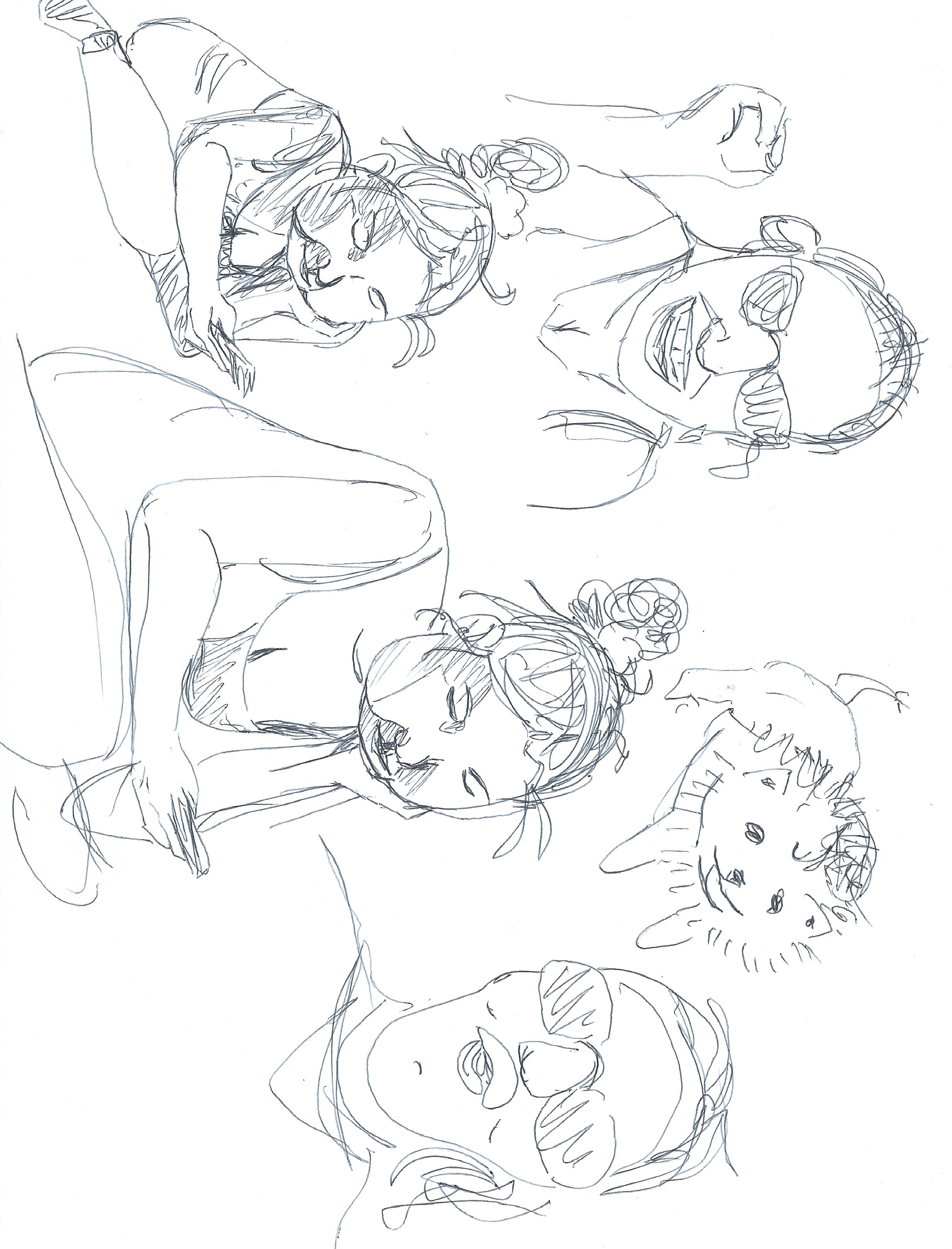
Bubby Sketch 1
March 1, 2021
Art

Bubby the Wanderer, lost in the rain.

Praise Pig Day!
March 1, 2021
Announcement

The blog is one year old today. Hurray!

You really take on a project like this for the archive page. You want to be able to open that sucker up every once in a while and see a huge list of links. I got the idea from Homestuck’s archive of comic pages spanning thousands of entries. There was nothing fancy about it, just a massive wall of blue text flowing downward for miles. My archive doesn’t even necessitate a scroll wheel to traverse, it’s that small. And it isn’t for a lack of publishable content on my part either. I’m writing all kinds of junk all the time, stuff that either gets submitted once or thrown away and never again sees the light of day. I have some work to do this year, that is for sure. I’m pretty busy writing this big stressful thesis on Minecraft at the moment, so I won’t make any concrete promises. I do, however, intend to push some kind of content at least once a month. I suppose a crappy pen sketch counts. We’ll see what I can muster.

Now the fun part… site analytics!

Last month, February 2021, aaaahh.net received 827 visits. Of that number, 443 of them were unique visits. I have no idea how any of that is calculated. On average, the site gets 8.58 hits per visit with 7,130 hits total in February. I don’t know if most of those are bots or if 400+ living humans actually visited my website. A good chunk of those have to be real people, right? I think the software is supposed to sift out robots and worms.

In 2020, the website received 4,981 total visits and 1,723 unique visitors. Over 33,000 hits AKA page views across all of that. The total bandwidth for 2020 reached 694.23 MB. Not even a gigabyte of content consumed! I suspect I am overpaying for hosting.

As one might expect, the view counts really seem to shoot up during months that I actually post content. Total views seems to be on an upward trend, so maybe people are actually bookmarking this thing. Or the bots are finding it valuable.

That is all for now. If I discover any other interesting stats, they will be posted. If you have enjoyed the site and would like to ask a question, feel free to contact me at aaron@aaaahh.net. I don’t have this email on my phone yet, so expect significant delays in response time. If you would be interested in being part of an infrequent email list with notable content updates, please let me know.

Happy holidays!

Diplodocus
February 12, 2021
Poetry

Neck an unfurling fern

Blooming from the dirt

Already larger than a golden retriever

Soon larger than a car

Larger than anything

that will ever roam land


Just try to eat me

These trunks that churn loam

Forest feller

Meadow maker

You cannot fathom my girth 


O, but these lungs are tired

This behemoth drum

This sweeping neck

A titanic burden

Balanced by a tendril tail that whips in the wind


Steel not

This suspension bridge needs

The bristles and cones of bygone trees

Fuel the greatest engine that ever breathed

For twenty million years and more


And you, monkey?

Just six million

And probably not one more


Even now, my remains stun the world 

America has not forgotten my tour

An acre per a step for a lifetime as long as yours

And I am not forgotten

My hulking form 

Makes your children

Awed

Weep


Tom Brady is one sexy hunk of a man
February 8, 2021
Essay

Tom Brady is the strongest man that ever lived.

He’s clever too.

Look at those sharp eyes, shining diadems upon a high cheek dobbed in black. The luster of his smoulder, slickened by the sweat of other men, emboldens the eye of the watcher. He inspires in a glance. His teammates move with him, organs, extensions of his will and love.

I love Tom Brady. I love his form. I love his mind. He is a man that lives for what he does. We aspire for the same, but hope is not the distillation of Brady’s life. He is a crystal of victory, a diamond that drives the point into the rock and shatters it. All that lives and breaths bends toward his star. He drives, hands before and aft as he wills the earth beneath him. How can a wrist so twisted with muscle perform such supple machinations? We cannot experience these things. We cannot know victory as Tom does.

Tom Brady is the heart that beats at the center of the United States of America. The dream is his, as is the family. When he stands upon the stage of victory, the wife and children are never far from his thoughts. They are often with him as he accepts the fruits of his work. Those lips, still wet from the battle cries of the open fields, do not stray far from his son’s. A man that is not afraid to kiss his aging children is a man that must be respected. Not only is he a paragon of the physical; Tom Brady is a man of value, of heritage. The adoring eyes of his wife would inspire envy if they did not already fill the soul with a longing for the more noble standard of manhood established by the king himself.

If victory were a sash worn upon the shoulder, Tom Brady would appear to us as an angel. His shining aura blinds as it illuminates. His opponents slide from his armor like slugs. The unrighteous are repelled by his visage while the feeble find in his gaze the will to move mountains. Blessed. Divine.

Once, when I was too young to understand the intricate dance of Football, a vision came to me. My spirit was whisked into the firmament where I was greeted by Tom Brady himself. He said, “Do not be afraid,” and told of me the truth that lies at the heart of universe. Clothed in robes of white and shining like an eagle, the impression of his honed musculature could be made out among the folds. His arms, gentle but infinitely capable, enfolded and warmed me, and I glanced openly at the fine, jet-fighter pectorals. Where his sturdy hips met, the outline of a turgid force made itself apparent, and I blushed. Tom Brady was unshaken by my stare, and he held me closer.

“Understand, son, that you do not move about the world. This Earth is but a canvas upon which the tread of your heels work to mold fissures of time and energy.”

I did not fully comprehend Brady’s words then, but he reassured me that all would be clear in time. All I had to do was believe in my self and promote the best in those around me.

The vision slipped away all too soon. My spirit returned to Earth long before my mind remembered its true state, and when my eyes finally fluttered open, the light of the dawn star was already flowing through the cracks in my shades.

Civilization will not forget Tom Brady. The Earth will not forget Tom Brady. We can only hope to attain even a fraction of his power in our short lives. God bless him and his children.

Pectus Excavatum
January 24, 2021
Comic

At long last, I finally made time to upload the greatest piece of art I have yet produced. I wrote, drew, and inked this entire project over the course of Fall Semester 2019. It had been sitting in a folder for over a year now, but I finally took the time to scan and crop the images for upload.

Any likeness to real persons and locations is strictly coincidental. Also, it reads right to left because I was reading manga. Oops.

[READ THE FULL COMIC HERE]

: )

The Lawn of Legend
January 19, 2021
Story

When I was younger, there was a brief period of time, a few weeks maybe, when the backyard did not get mowed. I don’t remember how old I was, but I do remember the glory of it. The grass rose up like a forest, tufted with fingers of seeds in serrated sheaths. Compared to the muddy, fungal waste that my childhood yard would become in proceeding decades, that brief period of stomach-high grass seemed like the beginning of the world.

We would play Pokémon in that grass, imagine all of the varieties that would inhabit my new corner of the wilderness. In the absence of any significant connection to real animals, Pokémon is like a drug to the child mind. It is really a wonder I went into that grass at all. I was generally terrified of insects and dead birds and anything that moved unpredictably. We were actually forbidden from playing in the tall grass. My mother screamed about ticks and other disease-carrying terrors, and my friend’s mother was even worse. Grass stains can kill, apparently.

The grass hurt my father the most. Each green needle stabbed at his pride and caused his skin to ooze beads of translucent shame. The grass was the latest slight in an endless train of frustrations that stretched back to before I was born. He would sigh over the grass and yell at the grass. He would complain about unheard whispers from the neighbors about the decline of our suburban integrity. This grass is destroying us! We are the neighborhood laughingstock!

Maybe the lawn mower was broken? That herbivorous shark of a machine with aerodynamic hull and one-thousand speeds? I really don’t remember.

The issue cleared up eventually. Dad fixed or borrowed a mowing device, and the tall grass was gone in an hour. I’m sure the exercise killed my lungs and forced my eyeballs shut for a week.

Many years later, the third-grade teacher that lived across the street would get a divorce and move away. In her place came an Indian family, a father, mother, and a little son that liked to wander and gape every corner of his new yard. This turn of events gave the neighborhood something to joke about. Little comments about smelling curry every time the doors swung open began to propagate. Sometimes the father didn’t wave or smile hard enough when the Lexuses drove by. An exotic new neighbor gives a suburb excitement to feed upon for months.

Among all the little peeves, this new neighbor had one crucial flaw–the father did not know how to take care of his yard. As his stay grew longer, so did his grass. Before long, his front yard was a matted forest straight out of my primordial past. I’m sure the experienced enriched the toddler’s life immensely, but it was a bane to the established neighborhood. Old griefs were reborn in my father, and he began to complain about the embarrassment just across the street. His imagination swam with the terror of plummeting property values. Is the guy going to hire a crew? My father eventually settled on the theory that the guy was a big city tech-wizard that had come to colonize American suburbia. No lawns in the concrete jungle.

Eventually, my dad took it upon himself to lay the green menace low. He took his monster mower across the street and cleaned up the place in no time at all. I don’t live there anymore, but I imagine the lawns are still as flat and brown as ever. An unpruned landscape is a very dangerous thing.

Starting a Planted Aquarium
January 17, 2021
Aquarium
Blog

One of the chief traumas of my youth surrounds a pet frog. I have long been interested in keeping glass-bound pets, fish and such. This mania possibly stems from the massive fish tank that my mother used to keep in her store. It housed a pair of massive sucker fish (plecos, highly invasive), vicious orange cichlids with roving eyes, and a plethora of smaller fish that would be eaten and replaced over time. Maybe it was all the wildlife documentaries. Something in my deeper youth spurred me to keep strange animals, but my patience was not built for it. In the sixth grade, all I could think about was owning a dart frog. In the tropical rain forests of South America, the diet of these frogs allows them to manufacture some of the deadliest poisons in the world. In captivity, feasting on flightless fruit flies and basking under electronic light renders the domestic dart frog relatively harmless. The conditions necessary to sustain their lives, however, remain strict. The humid atmosphere and lush flora of the rain forest must be recreated in a glass cube.

I was not up to the task, and the frog that I had shipped to my house that summer died a few months later as Autumn began to make my house very cold and dry. Various follies compounded to create the frog corpse that still lies buried in a forgotten plastic coffin in my childhood backyard. I have gone over the various mistakes in my mind many times throughout the intervening years, but the gist of them is that I cared more about having the exotic frog than caring for the frog’s necessary habitat. The loss of the frog left me terrified, and I decided that I would not own another aquarium pet until I was mature and financially independent enough to do it perfectly. Though I raised some tropical plants in my room for some years after, I never did overcome my fears. Six more years of living without obligations flew by without any serious attempts at aquarium building.

The desire never really left, and now that I am a mobile college student, the aquarium mania has returned in force. Inconvenience seems to spur the fantasy on, in fact. I went through a period of intense longing for a goldfish last semester. Thank god I could control myself! Had a fish died in transit between my apartment and my house, I probably would have driven off a bridge. No, I am not so foolish as to impulse by another animal that I don’t have the means to take care of. I am, however, more than capable of spending large sums of money on objects that might eventually lead to me owning an animal. Hence, this:

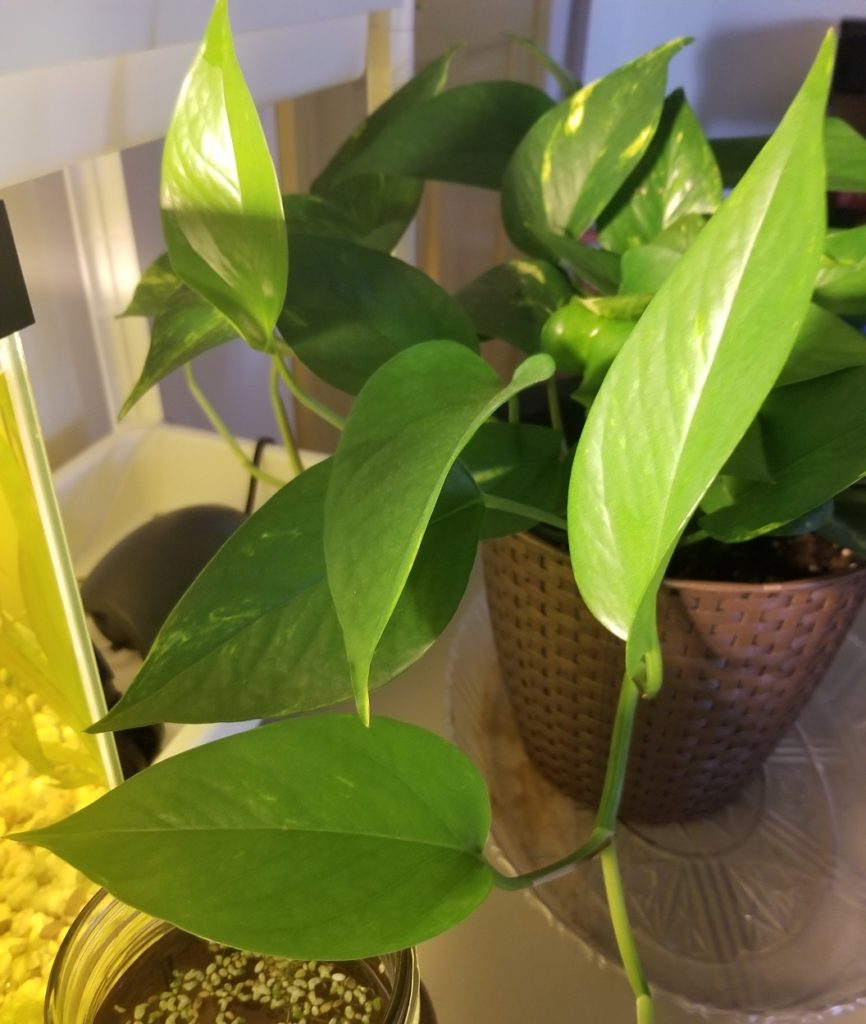
This is ten-gallon filterless aquarium housing live plants. I finally put the whole thing together yesterday. I picked up the glass aquarium for fifteen bucks on Facebook Marketplace. I paid a small fortune for the rock and gravel because I wanted to support my local hobby shop rather than save big on Amazon. The plants were certainly an impulse purchase—I ordered those online from a plant dealer in Washington called Aquarium Co-Op. I realized that if I did not force myself to plant something, the separate parts of the tank were going to sit in my basement forever. What you see here is two varieties of Vallisneria and dwarf hairgrass. I intend to run to the store and pick up some hornwort to fill in the gaps while the baby plants propagate and expand. The lamp is just a desk lamp with a 20-watt CFL bulb inside. I’m pretty sure it will provide enough light.

A hobbyist in the know would call this aquarium design a “Walstad Tank.” That is, a soil-based tank that attempts to use an ecosystem of plants of bacteria to perform the duties of an electronic filter. Just beneath the pretty gravel cap is some organic soil that will hopefully not cause dangerous bacteria to flourish and kill the tank. Ideally, the plants will use it to grow expansive root systems and spread across the entire aquarium to form a lush jungle of green. I got the idea for my tank from a YouTube aquarist, Foo the Flowerhorn. They designed a series of filterless tanks, one of which is a lively Betta fish tank that has sweet potatoes growing out the top! I love Foo’s designs because they aren’t just plastic-laden fish containers—they attempt to create vibrant natural spaces that place just as much emphasis on environment as pet-keeping. The plants are not auxiliary. They are central to the success of the tank.

I quickly learned that there is an entire section of the aquarium hobby dedicated to planted tanks. In 9th grade biology, my teacher asked us to prepare biospheres for the upcoming science fair. By feeding ammonia to a jar of pond dirt and hornwort gathered outside my house, I was able to sustain a shrimp for several days. I did not realize it at the time, but that is basically how a filterless aquarium works. The bacteria in the tank turns waste materials into useful nitrates that the plants can recycle to keep the environment going. To help grow the beneficial bacteria, I will be loading this tank with ammonia. My basement will soon smell of noxious piss, I’m sure, but I won’t be around much longer to deal with it. While I’m away at college this semester, my brother will be feeding the thing. I haven’t actually asked him yet, but who could say no to such an adorable aquarium? By the time I come back, unemployed and prospect-less, perhaps the tank will be ready to sustain fishy life. At the very least, a lush forest of aquatic plants would look splendid! I will update my blog as interesting details emerge.

My ultimate hope is to make good on my childhood mistakes. I must provide a wonderful environment for any living thing that falls under my care. I can’t even remember that poor frog’s name, but his shade will haunt me for the rest of my life.

Bubby the Wanderer
January 13, 2021
Art

How to Draw a Comic
January 11, 2021
Blog
Comic

In December of 2019, I completed a fifteen+ page comic of my own design. Well, I called it a “manga” because it reads right to left and I was reading a lot of that at the time, but let’s not kid ourselves here. The project spanned over half the semester, and it represents some of the most focused work I have ever undertaken. I was drawing every day, planning character designs and studying figures often. I can say with confidence that the comic project was some of the happiest work I have ever undertaken. It is strange, then, that the existence of the project pretty much evaporated from my mind the following year. The all-consuming wave of the pandemic wiped my brain like a magnet on a hard drive.

Once I find a suitable means of digitizing the comic, it will be uploaded here in full. For now, I would like to document some of the steps I took to place my life in the optimal configuration to draw as often as possible. I think the under-discussed key to improving at drawing (at least from the outset) is constant iteration. One must draw as much as possible. This is easier said than done, and this post contains the methods I used to achieve a state of boundless productivity.

I started the project by spending money. I’m a consumer whore at heart, and if I don’t buy something shiny, I won’t be satisfied that I’ve got the right stuff. My animal brain will dwell on what I don’t have and prevent me from starting in the first place. If you know anything about online drawing communities, then you are already familiar with this phenomenon. Tablet mania runs deep—many aspiring artists won’t start drawing until they purchase an expensive piece of Wacom tech. They realize with horror, as I have realized multiple times before, that it is not the technology that makes the artist. The drawings remain shit, even when rendered in Photoshop. Rather than feeling depressed over this mental dependence on shiny new things, I decided to leverage my habit to my benefit.

My girlfriend and I took a bus into Boston to buy some drawing supplies, mainly a notebook. There is a store on Mass Ave called Muji (It’s practically on top of the Massachusetts Turnpike). Muji is a kind of Japanese junk stores. It’s like an Apple Store for clothes and household knickknacks that plays hard into a beige, wood panel aesthetic. It is soothingly boring in there. Beanbags, benches, and incense complete the vibe. While most of their junk is priced beyond consideration, they used to boast a beautiful selection of stationery and pens. I still carry around $3 pocket-sized Muji notebooks for note taking and idea spaghetti on the go (the price has since raised a dollar, but I had the foresight to stock up). For this project, I grabbed something even cheaper, these $1.50 blank notebooks with basic binding.

If you are buying a drawing notebook, go dirt cheap. Seriously. When you spend big for a notebook with good paper and expensive binding, it doesn’t feel so great to fill it with shit. The fear of wasting a page on a bad drawing will ultimately get between you and the primary objective of drawing all the time. Don’t let the Youtuber artists fool you. These practice notebooks aren’t going to be beautiful flipping material from the onset, though you will be proud to do so when the notebook is finally full. I have considered doing away with buying notebooks completely, but stapled printer paper poses a serious durability problem. The inexpensive Muji notebooks are awesome because they still look and smell great when you buy them, so they scratch that purchase itch without making a dent in your conscious. You can even use these stamps they have to add little designs to them. Very Muji. The notebooks are on the smaller size and thin too, so you can slip them into a backpack or smaller bag without losing space or risking serious damage by crushing or bending them. Unfortunately, I don’t think Muji carries these things anymore. Before the pandemic, they slimmed their selection down considerably and most of their budget stationary disappeared. I intend to write them a letter.

I also visited my local comic shop and picked up a handful of material from the fifty-cent bin. Old Marvels. These would be my reference. The simplicity of the line work and high contrast coloration makes for simple study material. My reasoning stood that by copying entire panels from these comic books, I could develop an internal library of poses and figures to draw upon in my own work. Art is plagiarism, don’t forget that. These comics also provide that dopamine rush of spending money on something cool and are destruction-proof. I wouldn’t be particularly upset if these trash comics suddenly burnt to a crisp while I slept. By either sheer coincidence or the logic of industrial binding, the comics and the Muji notebooks were the same size. They could be leafed into each other to create a single, convenient bundle.

The bundle turned out to be everything. One day before Shakespeare class, at a point in the semester when the wind was brisk but still tolerable enough to sit outside, I pulled out my materials on a metal bench and just started copying the things I saw in the comic. The activity was so engrossing that I almost missed the start of class. I began undertaking these simple studies whenever I had downtime—between classes, while procrastinating another project, etc. By making my practice as portable and straightforward as possible, I had solved my mental block and managed to make drawing fun again. After years of cranking out meaningless essay materials on pure deadline stress and adrenaline, the shift to working on a project long term and loving every second of it was shocking. It is important to remember that it is possible to feel that way about work.

I did some pretty clever things over the course of this project. Inking was a problem. I didn’t want the final comic to look like it was drawn from pencil, but tracing is difficult without a light table. I had to invent my own. During my Halloween all-nighter to complete the first draft, I found a flat-screen TV and pilfered a sheet of glass from the university art complex. By laying the TV on its back with the glass on top of it, I was able to create a functional light table. I must have looked insane, but at least I could revise my work.

The pandemic should have offered me a slate of time to continue this craft unbothered by practical reality, but it fled my mind in March. Many things did. This website is another lost item. I had finally crafted a canvas for publishing my writing and artwork online, but this blog went blank shortly after quarantine began. Maybe some artists can work in such stifled conditions, but I quickly lost grasp of time and sank into the simulated world.

I want to get drawing back. Maybe the comic shop is still open?

Scratched Bowl
January 9, 2021
Story

A scratched bowl can be a precarious thing. Jeremy was scraping rice out of a plastic one when he noticed its etched bottom. As the rice was reduced to a few grainy pockets, little silver lines made themselves known. Jeremy stopped mid-chew and pulled the bowl closer to his face. The etchings were fine, almost pretty. But why were they silver? He lifted his fork and frowned. The utensil was silver too.

Jeremy softly placed the bowl down on the couch next to him and stood up, mouth still stocked with rice. Hands tingling and head faint, the teenager walked to the trash bin and opened wide. A semi-chewed lump rolled off his tongue and made a “piff” as it pelted the empty trash bag. The lump clung to the side of the plastic and did not roll. Jeremy steadied himself against a countertop as his thoughts raced.

He wasn’t sure if he should throw the bowl away or the fork. He tossed both. He went to sit down again when another terrifying thought struck. Jeremy ran to the kitchen and drew another plastic bowl out of the cupboard. This one was scratched even more.

“Have I been eating plastic and fork my whole life?”

Jeremy’s belly tightened as he imagined a stomach lined with a thickening layer of undigestible detritus. He began rifling through the cabinets, peering into childhood bowls and mugs. Each mug has a spiral of slashes at its bottom from years of tea swirling. His once coveted Thomas the Tank Engine sippy bowl possessed a hull practically torn to shreds. He threw it into the trash.

Jeremy’s head swam and his chest heaved at an air supply that suddenly felt very limited. His tongue was like a brick in his mouth. Before a panic attack could bring him low, a killing thought infiltrated the conscious world.

“Teflon! Motherfucking Teflon!”

He practically tore the cabinet door off its hinges as he rummaged for his mother’s favorite frying pan. She lovingly crafted scrambled eggs on that thing for Saturday mornings beyond count. The image of the thing once conjured the scent of frying bacon and grease-battered home fries, but that was gone now, replaced by an emerging terror. Jeremy’s rummaging became frantic. He tore through stacks of cookware, digging through pot lids like a crazed badger escaping the neighbor’s spaniel. It did not take long to find the culprit.

It was horrific. The old pan was scratched to shit, with flecks of black coating scraped clean from ages of spatula contact. It resembled a peeling wall. Some distant knowledge of the dangers of cooking with old Teflon equipment flitted through Jeremy’s brain. Disgust caused him to leap upward suddenly, but the edge of the counter met his cranium on the ascent. If the counter wasn’t what knocked Jeremy out, the cast-iron skillet knocked from its peg certainly did.

Jeremy awoke in a grey landscape, a clearing of sorts. The trees that surrounded him were like mercury pillars, sharp and reflective. He quickly realized that the clearing wasn’t lined with trees at all–they were forks! As he stared at them, they began to decay. The silver coatings peeled backwards, curling like tinsel to reveal rough interiors of knotted rust. The orange brown metal immediately began to disintegrate. Jeremy sensed plumes of invisible flecks invading his lungs. He fled, the giant forks festering all around him. He closed his eyes as he ran and covered his nose and mouth with the cloth of his t-shirt. Blind, he eventually tumbled down a smooth incline.

A burning at his back forced Jeremy to open his eyes. He had apparently rolled farther than he thought, because the fork forest was nowhere to be seen. His back was resting upon the lowest point of an extremely smooth bowl. It was like glass. It was glass. The burning became a searing pain, and Jeremy launched to his feet. The green-tinged glass was too steep and smooth to climb, but that did not prevent Jeremy from trying. As he tried to use his palms to grip the surface of the incline, he yelped. It felt like acid was eating away at his skin. His shoes smoked, too.

“Oh shit.”

Jeremy suddenly recognized his enclosure. His grandmother owned a bowl exactly like this, only small enough for a human to eat out of. It was depression-era glassware, apparently. Uranium.

Uranium glass.

Jeremy used to eat out of that bowl every time he visited nanna. It was his favorite. He could not believe that he used to scoop cheerios out of an irradiated bowl. His poor grandmother had plenty of glassware like it around the house. Thoughts of nanna’s brain turning to radioactive mush while scooping oatmeal elicited tears.

As the evil bowl devoured the soles of his feet, Jeremy could not help but cry out in despair. The material world unraveled around him. His skin intermingled with glass and metal and his nails melded into the cloth of his sweatpants as he gripped them. His teeth bloomed from his maw like glorious crystals and evaporated into the atmosphere alongside the rest of his conscious mind.

Jeremy died that very day. His sister discovered him dead on the kitchen floor, frying pan gripped so tightly in his left hand that his fingers bled.